



How Do You Choose a Heavy Duty Brass Sink Strainer With Tailpiece?
Choose a heavy duty brass Sink Strainer with tailpiece by confirming the sink opening, connection type, tailpiece length, available cabinet space, and required finish. For most kitchen applications, select a corrosion-resistant brass body with a reliable sealing washer, a compatible threaded tailpiece, and a basket that matches the drain opening and sink depth.
- Measure the sink opening and confirm the drain size before ordering a sink drain assembly.
- Use solid brass when mechanical strength, repeated servicing, and long-term durability matter.
- Match the tailpiece connection, length, outlet direction, and trap configuration to the existing Pipe Fitting.
- Check sealing surfaces, washers, threads, finish, and compliance documentation for commercial or project use.
Choosing a heavy duty brass sink strainer with tailpiece is not simply a material decision; it is an interface decision between the sink, drain body, tailpiece, trap, and waste system. A kitchen drain buying guide notes that common strainers are generally between 3.5 and 4.5 inches in diameter, while the correct choice also depends on the drain opening and sink depth. This guide explains how to evaluate the assembly, avoid common fit problems, and specify a dependable component for residential, commercial, wholesale, and replacement applications.
1. Start With the Sink Opening and Drain Geometry
The sink opening is the first dimension to verify because a strong strainer cannot compensate for an incompatible opening. Do not assume that every kitchen sink uses the same drain size. Measure the opening itself, review the sink manufacturer's cutout information, and compare the measurement with the strainer's stated body and flange dimensions.
Sink depth is the second geometric factor because it affects clearance beneath the bowl. A deep sink may place the drain outlet lower than expected, reducing room for the tailpiece, trap, disposal connection, or adjacent basin piping. The Oatey sink strainer guide identifies sink size and body, connection type, tailpieces, drain stoppers, and body material as key selection considerations.
| Selection check | Measurement or evidence | Why it matters |
|---|---|---|
| 1. Sink opening | Record the actual opening in inches | Prevents an undersized or oversized flange from sealing correctly |
| 2. Sink depth | Measure bowl depth and underside clearance | Determines tailpiece and trap space |
| 3. Drain outlet | Confirm outlet direction and connection type | Reduces alignment problems with existing pipe fittings |
| 4. Basin arrangement | Check single or double bowl configuration | Helps coordinate tee fittings and neighboring drains |
2. Compare Brass With Alternative Drain Materials
Solid brass is usually selected when a drain assembly must tolerate repeated tightening, handling, and maintenance. Brass provides a rigid threaded connection and is less likely to deform during installation than a thin stamped component, but material quality, wall thickness, plating, and machining still determine performance.
Stainless steel can be an appropriate alternative where appearance, corrosion resistance, or a specific specification favors it. Plastic components may reduce cost and weight, but they should be evaluated for thread strength, temperature exposure, chemical compatibility, and the service environment. The correct choice depends on the application rather than on material marketing alone.
A heavy duty specification should therefore describe more than the word brass. Ask whether the body is solid brass, which parts are brass or stainless steel, how the threads are formed, whether the basket is removable, and how the assembly is tested for leakage. For a B2B buyer, these details are more useful than a generic claim of premium construction.
3. Match the Tailpiece to the Pipe Fitting
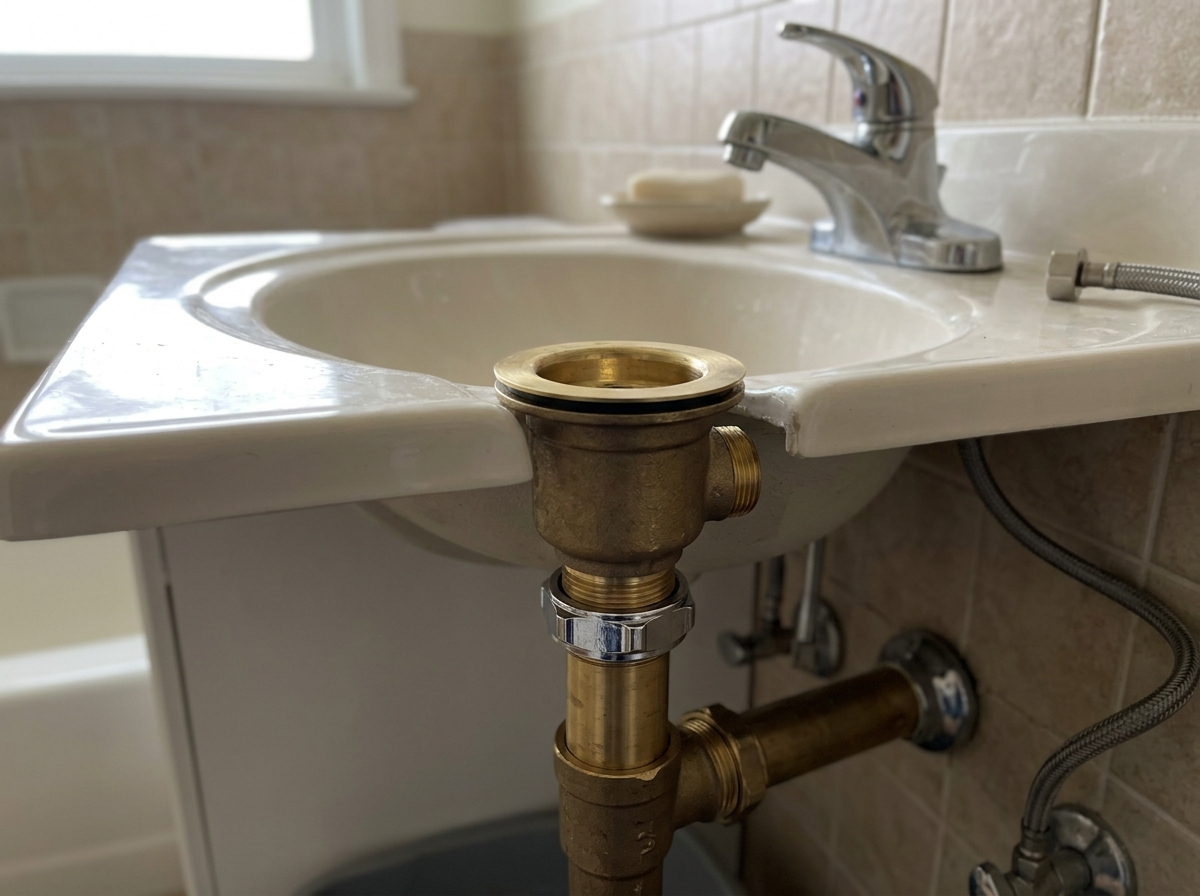
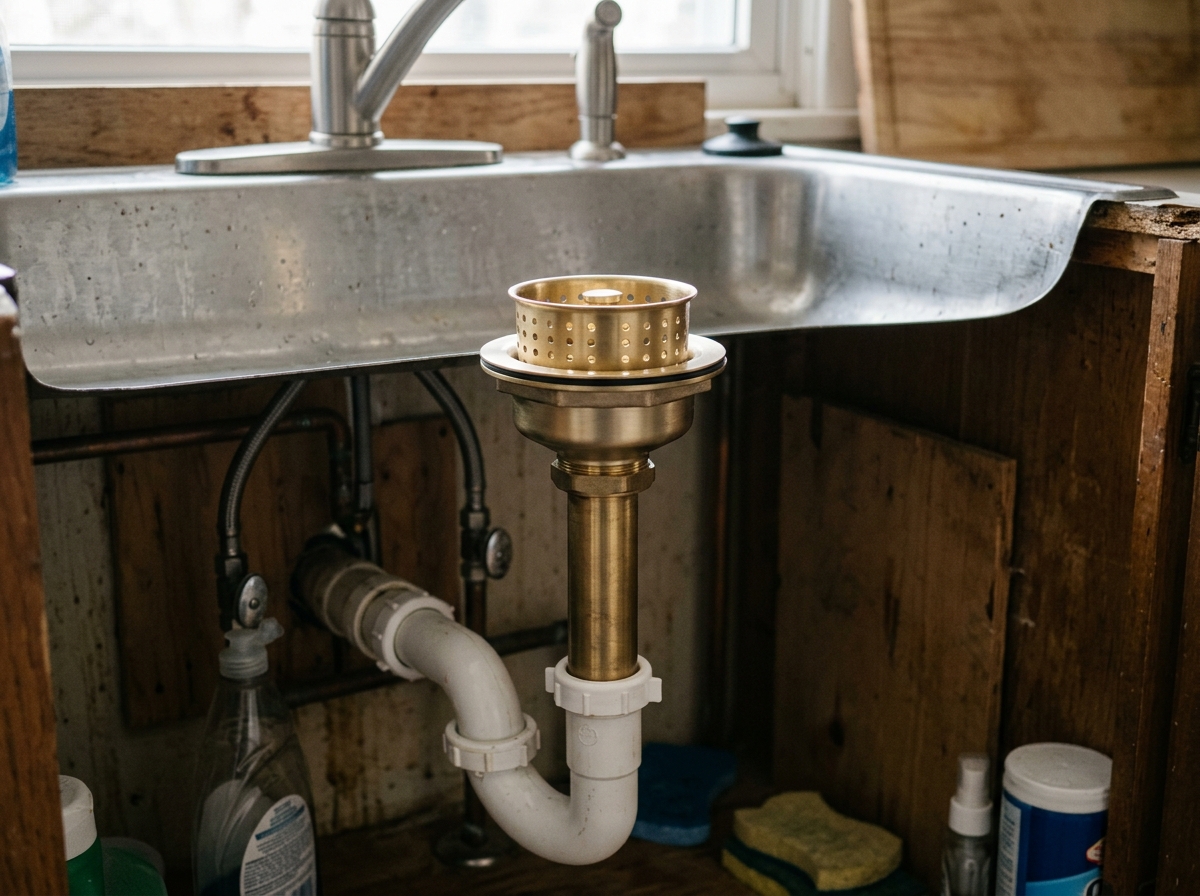
The tailpiece is the connection section below the strainer, so its outlet must match the downstream plumbing. Confirm the nominal connection size, thread or slip-joint arrangement, tube diameter, length, and whether the tailpiece is straight, offset, or designed for a disposal or double-bowl layout.
Tailpiece length should be selected from the actual installation, not from the product photograph. A long tailpiece may require cutting, while a short tailpiece can force an extension and create additional joints. Measure from the underside of the sink to the trap inlet, then allow enough room for the washer, nut, and adjustment without placing stress on the drain body.
For a replacement project, remove or photograph the existing assembly before ordering. Record the trap position, outlet direction, and any tee or branch connection. For a new installation, draw the drain path and identify every pipe fitting before selecting the strainer package.
- Measure the sink opening and bowl depth.
- Identify the downstream trap or disposal connection.
- Confirm the tailpiece size and connection style.
- Compare the tailpiece length with the available cabinet clearance.
- Verify that washers and nuts match the drain body and pipe fitting.
4. Evaluate the Basket, Flange, and Sealing System
The sealing system determines whether the assembly remains watertight after installation and repeated use. Inspect the flange finish, gasket material, locknut, friction ring, and sealing surfaces as one system rather than evaluating the basket alone.
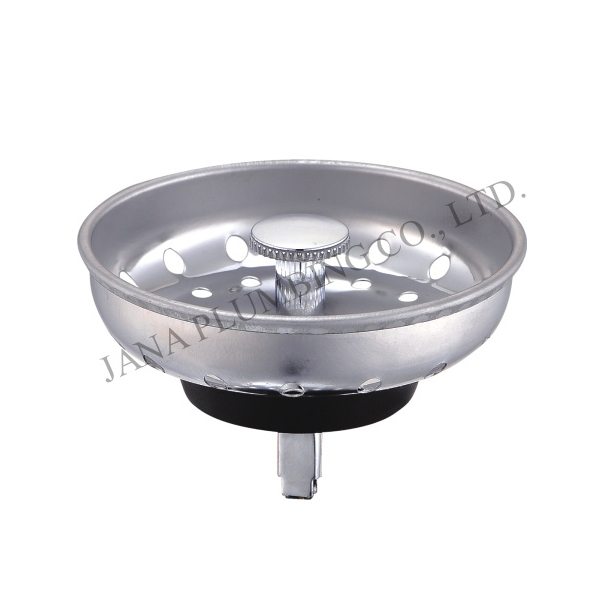
A removable basket is useful for cleaning and replacement, particularly in kitchens where food particles and grease can collect around the strainer. A basket with a secure seating surface should drain freely while limiting large debris from entering the waste line. If a stopper or special basket is included, verify its operating method and replacement availability.
Finish selection should support both service conditions and visual consistency. Common project requirements may include polished, brushed, chrome, or other decorative finishes, but the finish should not conceal poor machining, damaged threads, or uneven flange surfaces. In visible installations, compare the strainer finish with the faucet and other exposed plumbing hardware.
| Component | Inspection point | Installation consequence |
|---|---|---|
| Flange | Flatness, finish, and underside contact | Uneven contact can cause leakage |
| Basket | Removability and debris openings | Affects cleaning and drainage behavior |
| Washer | Correct size and undamaged surface | Supports compression under the locknut |
| Tailpiece | Threads, tube end, and length | Controls connection to the trap or branch fitting |
| Locknut | Thread engagement and tightening access | Secures the body without excessive force |
5. Select the Assembly for the Application
Residential replacement, commercial building, wholesale distribution, and RV use can require different priorities. A residential replacement may focus on fast fitment and finish matching, while a commercial buyer may prioritize repeatability, packaging, documentation, and replacement-part support.
For a double-bowl kitchen sink, confirm whether the package includes a tee, two strainers, or only one drain body. For a sink with a garbage disposal, verify flange and stopper compatibility rather than assuming a standard basket will work. For an RV or compact installation, cabinet clearance, vibration, weight, and access for service may be more important than decorative appearance.
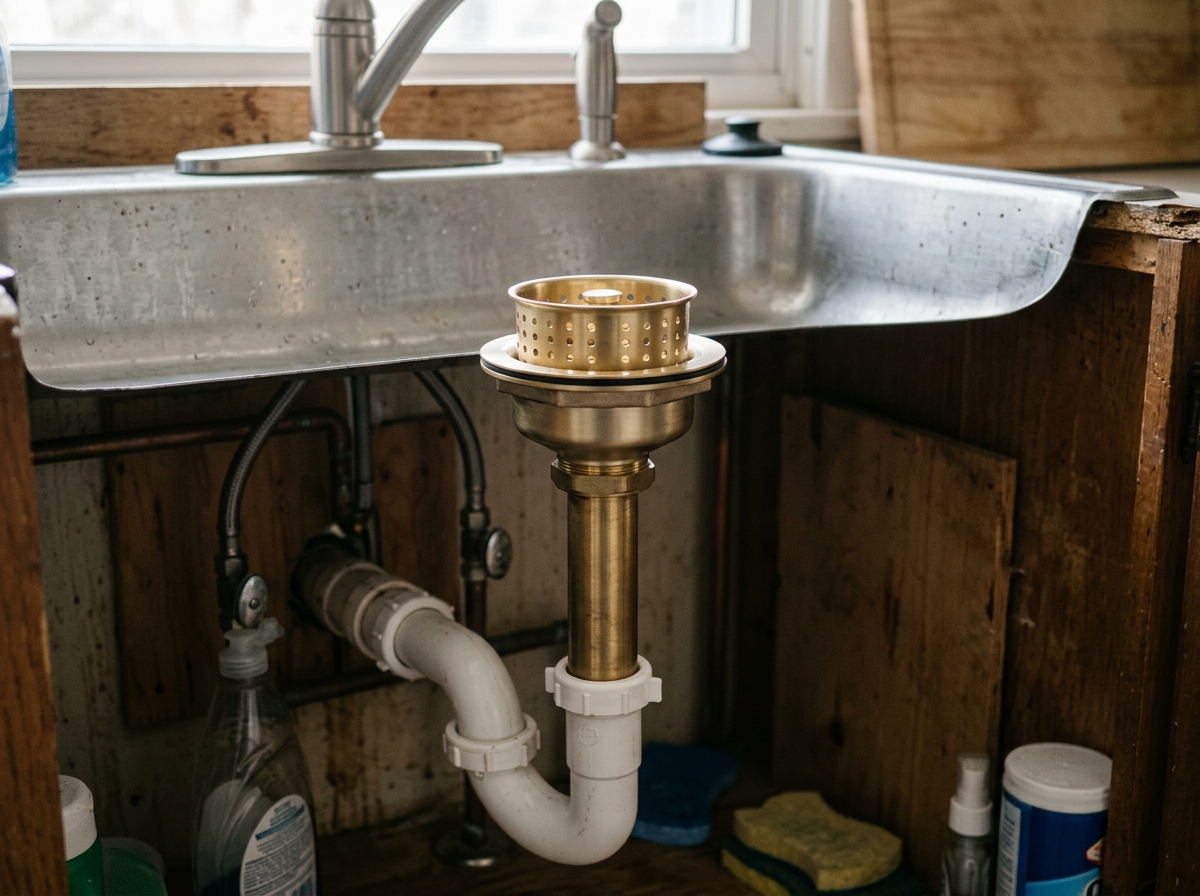
Project procurement should also review quality-control procedures, batch consistency, packaging protection, and available compliance documents. The supplier should be able to identify material options, finish options, inspection steps, and replacement components without relying only on a catalog photograph.
6. Installation and Leak-Testing Principles
Correct installation depends on clean, aligned sealing surfaces and moderate tightening. Remove old putty or residue from the sink opening, inspect the flange, position the sealing material according to the manufacturer's instructions, and keep the drain body centered while tightening the underside hardware.
Do not use excessive force to compensate for misalignment. Over-tightening can distort a washer, damage threads, or place stress on the sink. The tailpiece should enter the downstream fitting without being forced sideways. If the parts do not align naturally, correct the layout with the appropriate pipe fitting or extension rather than loading the strainer body.
Leak testing should be performed before the cabinet is closed or the installation is handed over. Fill the basin, drain it, inspect the flange and locknut area, and check every tailpiece and trap joint. Repeat the test after the assembly has been operated and cleaned once, because movement during service can reveal a weak connection.
| Test stage | Action | Pass condition |
|---|---|---|
| 1 | Visual inspection | No damaged threads, cracks, or displaced washers |
| 2 | Partial basin fill | No seepage around the flange |
| 3 | Full drain-down | No leakage at the tailpiece or trap joint |
| 4 | Repeat operation | Connections remain stable after service movement |
7. A Practical Purchasing Checklist
The safest purchase specification combines dimensions, material, connection details, finish, and documentation. Use the following checklist when comparing a catalog item, quotation, or replacement part.
- Sink opening and flange dimensions are confirmed.
- Sink depth and underside cabinet clearance are documented.
- Body material and basket material are clearly stated.
- Tailpiece diameter, connection type, and length are compatible.
- Washer, locknut, and sealing components are included or separately identified.
- Finish is suitable for the visible installation.
- Disposal, double-bowl, stopper, or RV requirements are addressed.
- Replacement baskets and other service parts are available.
- Quality, compliance, packaging, and delivery requirements are documented for project orders.
Frequently Asked Questions
1. What makes a sink strainer heavy duty?
A Heavy Duty Strainer generally uses a rigid body, durable threads, a stable flange, and serviceable components. Confirm the actual material and construction with the supplier instead of relying on the label alone.
2. Is brass better than stainless steel for a sink drain?
Neither material is universally better. Brass is often valued for rigidity and threaded strength, while stainless steel may suit corrosion, appearance, or specification requirements. Compare the complete assembly and service environment.
3. How do I know which tailpiece length to buy?
Measure from the underside of the sink to the trap or branch fitting, then compare that distance with the usable tailpiece length and washer space. Select a length that allows natural alignment without forcing the joints.
4. Are kitchen sink strainers a standard size?
Many Kitchen Strainers fall within a common size range, but the exact opening, flange, sink depth, and connection arrangement must still be verified. Thekitchen drain buying guide also emphasizes the importance of drain opening and sink depth.
5. Can I replace only the basket?
Often, yes, if the replacement basket matches the existing body and seating surface. If the flange, threads, or locknut are damaged, replacing the complete sink drain assembly is usually more reliable.
6. Should I choose a strainer with a tailpiece included?
An included tailpiece can simplify purchasing and improve component compatibility, but verify its length and connection type. A package is useful only when it matches the downstream pipe fitting.
7. What should wholesalers ask a manufacturer?
Ask for material specifications, dimensional drawings, finish options, inspection procedures, packaging details, replacement-part availability, compliance documents, and production lead-time information. These details help reduce inconsistent replacement orders.
About JANA PLUMBING
JANA PLUMBING has manufactured bathroom and kitchen drainage hardware since 1998, with production in eastern China and a second factory in Thailand. Its product range includes sink strainers, lavatory drains, Bath Drains, shower drains, and pipe fittings in brass and stainless steel. The company supports building retail, wholesale, engineering, replacement, and RV channels, with automated manufacturing, quality control, and documentation for North American market requirements. Contact the team to discuss a compatible drain assembly, tailpiece configuration, or wholesale specification.
For procurement teams, compare the complete specification rather than a single material label. A correctly measured opening, compatible tailpiece, dependable seal, and documented quality process provide the strongest foundation for a long-lasting sink drain installation.