

Discover the Secret to a Leak-Proof Compression Coupling
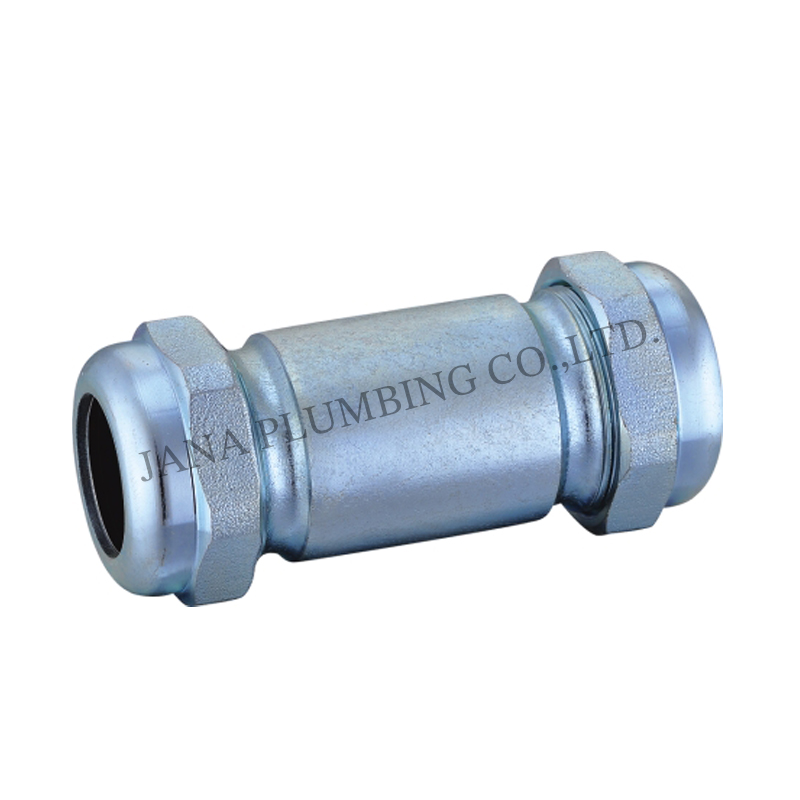
The secret to a truly leak-proof connection lies in material science. High-performance fittings use galvanized steel in their construction. This material provides unparalleled durability. It also offers exceptional corrosion resistance. This directly prevents leaks and ensures system integrity. A Compression Coupling built with this material delivers superior, long-lasting performance.
Key Takeaways
- Galvanized steel makes compression couplings strong and stops rust. This helps prevent leaks.
- Galvanized steel lasts a long time, often over 20 years. This means less fixing and saves money.
- Proper installation is key. Make sure pipes are cut straight and fittings are tightened correctly to avoid leaks.
Understanding Connection Failures in Compression Coupling
Common Causes of Leaks
Leaks in piping systems often cause frustration and costly repairs. Several factors commonly lead to these failures. Incorrect tightening is the most frequent issue. This happens when someone either under-tightens the fitting, creating a loose seal, or over-tightens it, which damages the fitting or unevenly compresses the ferrule. Misaligned pipes also cause problems. Pipes that do not align perfectly prevent the ferrule from seating correctly, leading to leaks. Damaged components, such as worn ferrules, nuts, or threads, compromise the fitting's integrity. Finally, improper ferrule installation means the ferrule does not seat correctly against both the pipe and the fitting. This prevents a proper seal and causes leaks.
The Role of Material in Preventing Failures
The material choice for a Compression Coupling directly influences its ability to prevent leaks. Material defects, like tiny cracks or inconsistencies, compromise the fitting's integrity. This leads directly to failures and potential leaks. Using incompatible materials can also trigger chemical reactions. These reactions degrade the fitting over time, weakening its seal. This increases its susceptibility to leaks. Therefore, selecting high-quality, compatible materials is crucial.
Engineers must choose materials carefully. For example, stainless steel works best in corrosive environments. Brass suits water and non-corrosive fluids. Stronger materials, like stainless steel, are necessary for high-pressure systems. They withstand stress and prevent material failure. The choice of gasket material also significantly influences the seal's longevity and effectiveness. High-performance elastomers, for instance, maintain reliable seals in demanding environments with extreme temperatures or aggressive chemicals. These materials prevent leaks where others might fail.
The Galvanized Steel Advantage for Compression Coupling
Galvanized steel offers significant advantages for a Compression Coupling. This material provides superior protection and performance. It ensures a reliable and long-lasting connection in many systems.
What is Galvanized Steel
Galvanization is a process that applies a protective zinc coating to steel. This coating prevents rust. Hot-dip galvanizing is the most common method. It involves submerging steel parts in molten zinc.
The hot-dip galvanizing process follows several steps:
- Workers clean the steel with a caustic solution. This removes oil, grease, dirt, and paint.
- They rinse off the caustic cleaning solution.
- Workers pickle the steel in an acidic solution. This removes mill scale.
- They rinse off the pickling solution.
- A flux, often zinc ammonium chloride, is applied. This stops oxidation and helps zinc stick. The flux dries.
- Workers dip the steel into the molten zinc bath. They hold it until its temperature matches the bath.
- They cool the steel in a quench tank. This lowers its temperature and prevents bad reactions with the air.
Other methods also exist for galvanizing steel. These include continuous galvanizing, thermal spray, electroplating, and sherardizing. Each method creates different coating thicknesses and properties. For example, hot-dip galvanized steel features multiple layers of zinc-iron alloy. This offers excellent adhesion and long-term corrosion resistance. Electro-galvanized steel has a smooth, uniform coating. It suits applications needing high precision. Galvannealed steel is easier to paint and weld. Pre-galvanized steel is galvanized before fabrication.
Superior Corrosion Resistance
Zinc coating on galvanized steel prevents corrosion effectively. Zinc forms a cathodic protective barrier. It is an electro-positive element with a low corrosion rate. Zinc acts as a sacrificial anode. It corrodes before the steel underneath. This protects the steel from atmospheric conditions and corrosive elements like moisture, oxygen, and salts.
Zinc also forms dense, sticky corrosion byproducts. These are called zinc patina. They create an extra barrier between the steel and the environment. Zinc's corrosion rate is much slower than steel's. It is 10 to 100 times slower. This provides inherent protection.
Corrosion rates vary in different environments. In atmospheric conditions, factors like temperature, humidity, and air salinity affect corrosion. Steel starts to corrode when humidity is 70-80% and temperature is above 32°F. Air impurities speed up this process. In soil, corrosion rates are highly variable. They depend on oxygen, moisture, and dissolved salts. Steel corrodes quickly in acidic soils and slowly in alkaline ones.
Consider the corrosion rates of different steel types at varying temperatures:
| Specimen Type | 50 °C (Relative Corrosion Rate) | 70 °C (Relative Corrosion Rate) | 90 °C (Relative Corrosion Rate) |
|---|---|---|---|
| Q235 steel | 1 | 1.83 | 7.09 |
| Undamaged galvanized steel | 0.07 | 1.24 | 4.69 |
| Damaged galvanized steel | 0.66 | 3.10 | 8.90 |
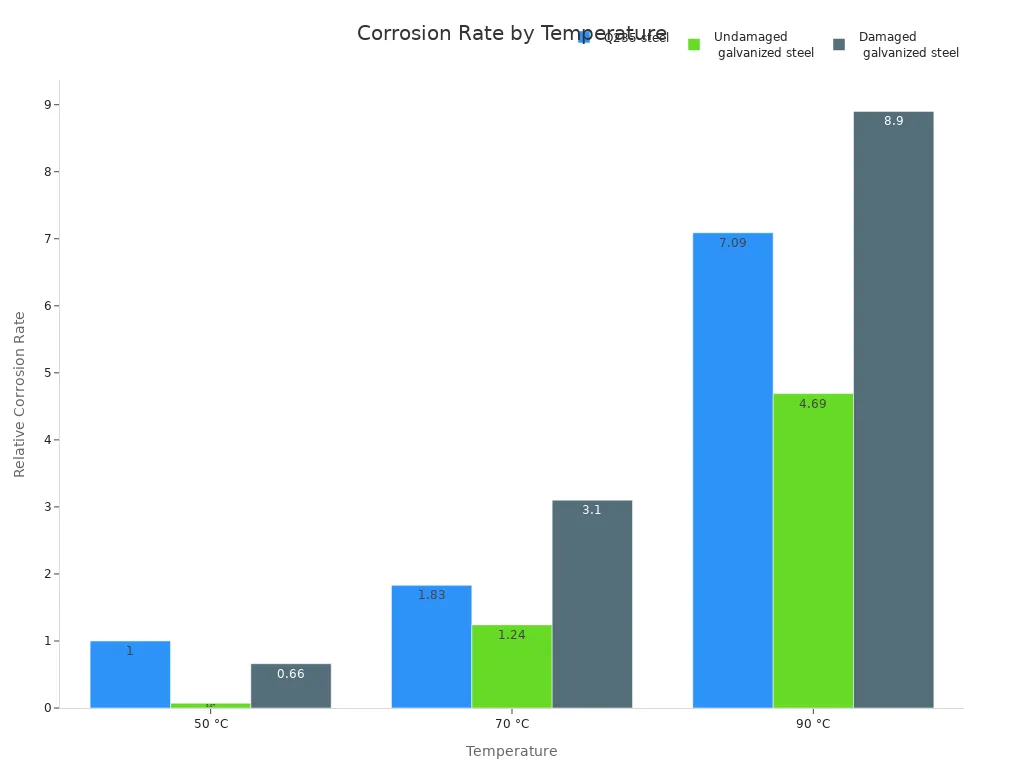
At 50 °C in a high-humidity neutral atmosphere, damaged galvanized steel's zinc layer effectively slows down base metal corrosion. However, at 70 °C and 90 °C, damage to the galvanized layer accelerates base metal corrosion. The corrosion rate of galvanized steel significantly increases from 50 °C to 70 °C. The effect on corrosion rate from 70 °C to 90 °C is less pronounced.
Enhanced Durability and Strength
Galvanized steel offers exceptional durability and strength. The steel itself provides a robust core. The zinc coating adds another layer of protection. This combination makes the material highly resistant to physical damage and wear. For galvanized Steel Compression Couplings, the minimum tensile strength is specified as ≥350 MPa. This high tensile strength means the material can withstand significant pulling forces without breaking. This inherent strength ensures the fitting maintains its integrity under pressure and stress.
Longevity and Reduced Maintenance
Galvanized steel fittings offer a long service life. Properly installed compression union fittings, including galvanized options, typically last over 20-30 years in standard environments. These fittings find use across diverse industries. They are common in petrochemical, oil & gas, metallurgy, power generation, water supply & drainage, and HVAC systems. They also serve in plumbing, gas and oil pipelines, fire protection systems, agriculture irrigation, and general construction.
Using galvanized steel leads to long-term cost savings. It reduces the need for frequent repainting, sealing, or pest removal. This saves time and prevents recurring maintenance expenses. The material's stiffness also reduces the likelihood of structural or alignment issues. This minimizes the need for fixes. Galvanized steel withstands extreme conditions like humidity, coastal environments, or snow. This prevents premature failure. Its extended lifespan, up to three times that of untreated or painted steel, means fewer replacements. This saves money on labor and materials. Despite potentially higher initial costs, galvanized steel offers a lower total cost of ownership over many years. This is due to reduced replacement needs, less labor for maintenance, and decreased downtime for repairs.
Achieving a Leak-Proof Compression Coupling System
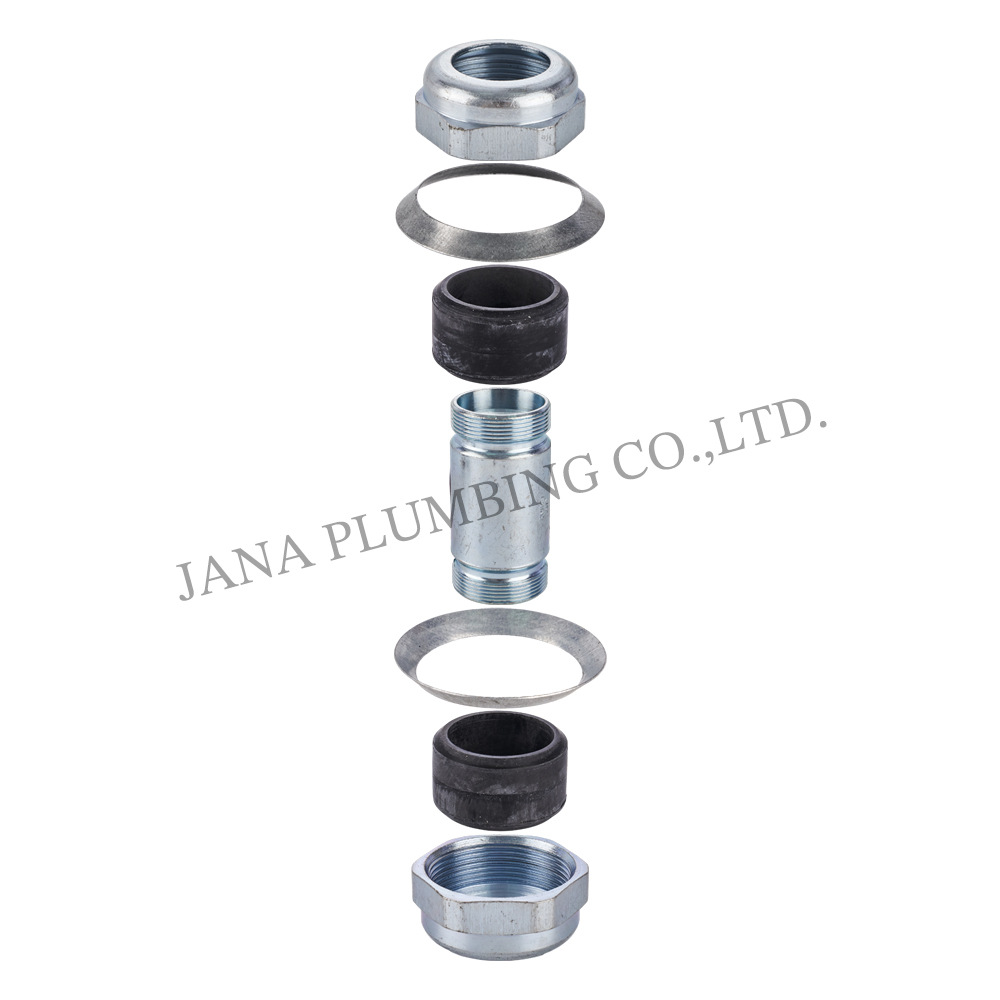
Achieving a truly leak-proof system requires careful attention to design, component integration, and installation. Each step plays a vital role in ensuring long-term reliability.
Design Principles for Secure Connections
Effective design forms the foundation of a secure connection. The ferrule, the primary sealing component, demands precise engineering. Its shape is critical for reliable compression. Tapered components convert linear motion into radial compression, creating an optimal line contact for seals. Two-piece ferrule designs prevent torque transfer, which avoids asymmetrical compression. Asymmetrical ferrules ensure consistent orientation, reducing leaks, especially with hard plastic tubing. Tubing selection also matters. Compression fittings work best with hard tubing that resists compression forces. Tubing should be smooth, free of roughness, and have a consistent diameter. Squarely cut ends are essential for symmetrical seating.
Integration with Other High-Quality Components
A leak-proof system relies on more than just the Compression Coupling itself. High-quality components must work together seamlessly. For instance, a Buna-N rubber gasket provides an excellent seal. This material deforms under pressure, creating a watertight barrier. Choosing compatible materials for all parts ensures system integrity. This prevents chemical reactions or degradation over time.
Proper Installation for Optimal Performance
Correct installation is paramount for preventing leaks. Many issues arise from common errors. Improper cutting of pipes, like PEX, creates uneven edges. This prevents proper seals. Always use a PEX pipe cutter for straight, clean cuts. Incomplete pipe insertion also weakens the seal. Push the pipe fully until it stops. Overtightening the compression nut can damage the fitting or deform the pipe. Tighten the nut firmly, but avoid excessive force. After hand-tightening, use a wrench for an additional 1 to 1.5 turns. Always follow the manufacturer's specific instructions. Using a torque wrench ensures precision and prevents both under-tightening and over-tightening. Regularly inspect fittings to maintain correct tightness.
Galvanized steel construction is the secret to a truly leak-proof connection. It gives a Compression Coupling unmatched corrosion resistance and durability. This material choice directly ensures long-term, reliable performance. It makes galvanized steel the superior choice for preventing leaks in various applications.
FAQ
Why choose galvanized steel for compression couplings?
Galvanized steel provides exceptional durability and corrosion resistance. It ensures a strong, long-lasting connection. This material effectively prevents leaks.
How does galvanized steel prevent leaks?
The zinc coating on galvanized steel acts as a sacrificial barrier. It protects the underlying steel from rust and corrosion. This maintains the fitting's integrity and seal.
How long do galvanized steel compression couplings typically last?
These couplings can last over 20-30 years in standard environments. Their robust construction and corrosion resistance ensure extended service life. This reduces maintenance needs.
