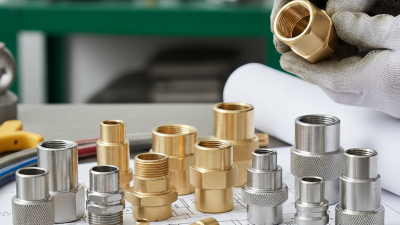
You might not think much of a Dielectric Union, but this little fitting actually plays a pretty important role in mixed-metal piping systems. Its job? Keep two different metals—say, copper and galvanized steel—from causing trouble when they’re connected. By separating them, it helps cut down on galvanic corrosion at that joint. It does this with an insulating washer, sleeve, or gasket that breaks the unwanted electrical contact. And honestly, the payoff is pretty practical — fewer rust stains, less damage to the threads, and better protection around water heaters and building service lines.
So, the NACE IMPACT study put global corrosion costs at roughly $2.5 trillion a year. That's about 3.4% of global GDP, according to the analysis they published. The report's big takeaway? Prevent the problem instead of paying for costly repairs later. A Dielectric Union definitely fits that approach—but it's not a magic fix that lets you skip good system design. You still need to pay attention to ASHRAE guidance, ASTM material practices, and local plumbing codes. And honestly, how well it's installed matters just as much.
You know, out in the field, it’s often the little stuff that gets you. A simple mistake can weaken the whole connection. Tighten things too much and you might damage the insulating parts. If the alignment’s off, that can put stress on the joint. And sometimes there’s a hidden bonding path that quietly bypasses the electrical isolation you meant to have. Also—not every corrosion issue calls for a Dielectric Union. Some setups need bonding, special transition fittings, or even different materials. And honestly, that’s worth admitting. Finally, check the product labels: they should tell you the pressure, temperature, fluid, and material compatibility. After installation, a qualified installer should really double-check that connection. And if you pick it based on solid evidence and take a careful look during inspection, this fitting stops being just some cheap accessory. It becomes a real, measured barrier—one that stands between corrosion risk and piping that stays reliable for the long haul.
What Is a Dielectric Union?
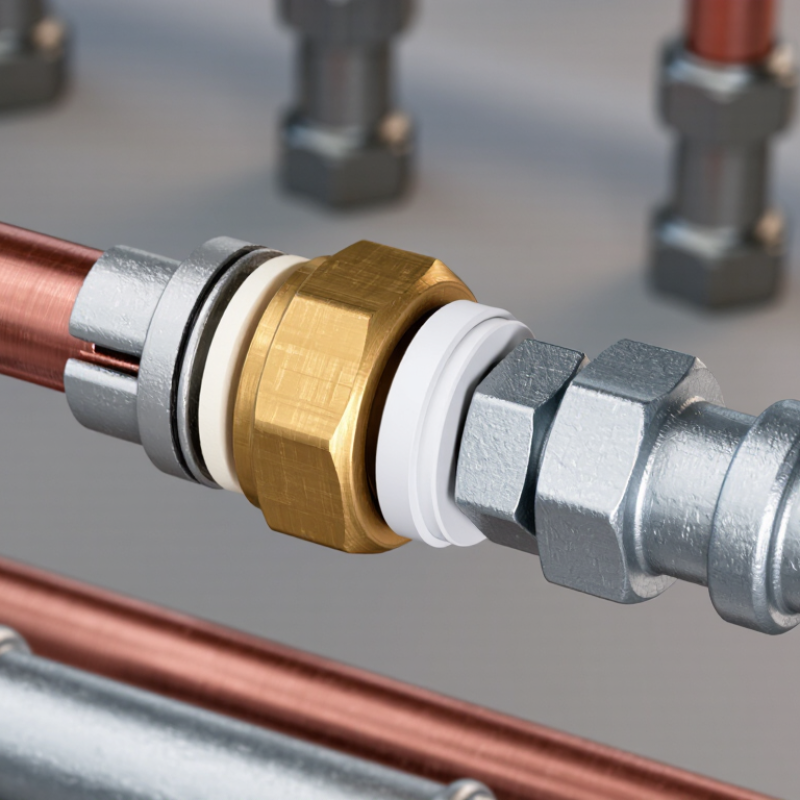
A dielectric union is a mechanical fitting that joins two dissimilar metal pipes. It commonly connects copper tubing to steel or galvanized pipe. Its insulating washer and sleeve interrupt direct electrical contact between the metals. This reduces galvanic corrosion, especially where moisture and dissolved minerals create a conductive path.
A 1 2 Dielectric Union can protect a small water-heater connection when installed correctly. The fitting still needs clean threads, proper alignment, and compatible sealing materials. Field inspections often reveal a simple problem: the insulating sleeve is cracked, missing, or compressed unevenly. Then the union may look professional but provide little electrical separation. It is not magic.
The NACE IMPACT study estimated global corrosion costs at about $2.5 trillion annually, equal to roughly 3.4% of global gross domestic product. That figure shows why small connection details deserve attention. The U.S. Environmental Protection Agency’s 2023 Drinking Water Infrastructure Needs Survey estimated $625 billion in needs over 20 years. Aging connections and corrosion control remain practical maintenance concerns.
Technicians should check continuity across the union with a suitable meter. They should also inspect nearby valves, nipples, and support points for water staining or white deposits. Dielectric unions can limit galvanic action, but they cannot correct poor water chemistry, stray current, or damaged pipe coatings. In real installations, the overlooked detail is often the deciding one.
How Dielectric Unions Prevent Galvanic Corrosion
Why Choose a Dielectric Union for Pipe Connections?
How Dielectric Unions Prevent Galvanic Corrosion
When copper pipe meets galvanized steel, moisture can create a small electrical circuit. That circuit drives galvanic corrosion between the dissimilar metals.
A dielectric union interrupts this contact with an insulating washer and sleeve. The metal ends still connect mechanically, but electricity cannot easily pass through the joint. This reduces corrosion around threads, sealing surfaces, and nearby pipe walls. In field inspections, early damage often appears as green deposits, rust stains, or damp marks beneath the connection.
A 2 1 2 Dielectric Union can help isolate larger threaded sections in mixed-metal plumbing systems. Correct installation matters. The pipe ends must be clean, aligned, and tightened without crushing the insulating components. A damaged washer can quietly defeat the entire connection.
It is not magic.
The union does not repair existing corrosion or eliminate every source of electrochemical activity. Unusual grounding conditions, trapped moisture, and poor drainage may still cause trouble. I have seen installations fail because one insulating sleeve was missing. That detail is easy to overlook.
Inspectors should check the seal, washer, sleeve, and surrounding pipe after installation. Periodic inspection also helps identify leaks before corrosion spreads behind insulation or into wall cavities. A dielectric union works best as part of a carefully planned piping system, not as a substitute for proper material selection and workmanship.
Key Components and Operating Principles
A dielectric union joins dissimilar metal pipes while limiting electrical contact between them. Its key components include metal union halves, an insulating washer, and a nonconductive sleeve. The washer seals the joint. The sleeve isolates the threaded connection. Small parts matter.
Galvanic corrosion begins when dissimilar metals share an electrolyte, such as conductive water. The more active metal can corrode faster. A dielectric union reduces the metallic electrical path and lowers galvanic current. It does not defeat poor water chemistry. Internal water can still create unwanted conductivity, so isolation should be verified during commissioning. The 2016 IMPACT study by the National Association of Corrosion Engineers estimated global corrosion costs at 2.5 trillion dollars annually. It also reported that 15–35% of corrosion costs could be prevented through better control practices.
Installation quality controls the operating principle. Pipe ends should be clean, aligned, and free from damaged threads. Excessive tightening may crush the insulating washer. Misalignment can transfer stress into the fitting. Field technicians often check continuity with a multimeter after assembly, then inspect for leakage under operating pressure. A failed continuity test deserves attention. The U.S. Department of Energy’s Operations & Maintenance Best Practices Guide links planned maintenance with potential energy savings of 5–20%, although that figure does not measure dielectric unions directly. This distinction matters. A union can be correctly selected yet incorrectly installed, leaving corrosion risk unresolved.
When to Use a Dielectric Union in Piping Systems
Why Choose a Dielectric Union for Pipe Connections?
When to Use a Dielectric Union in Piping Systems
A dielectric union is useful when two dissimilar metals meet in a piping system. Common examples include steel connected to copper near a water heater, boiler, or storage tank. Moisture and electrical contact can create galvanic corrosion between these metals. The union separates them with a nonconductive gasket and sleeve. This barrier can help protect threads, fittings, and nearby pipe surfaces. It also allows easier disconnection during repairs. That small advantage matters when a tight fitting sits behind a tank or inside a service cabinet.
Use a dielectric union only where the piping design requires electrical isolation. It should match the pipe size, pressure rating, temperature range, and fluid service. Installers should inspect the sealing surfaces carefully. Dirt, damaged threads, or an uneven gasket can cause leaks. A dielectric union is not a universal fix. Poor bonding, trapped moisture, or unsuitable materials may still create problems. In practice, the connection deserves a second check after the system reaches operating temperature. Details are easy to underestimate.
Tips: Confirm the metal types before selecting the fitting. Keep the joint accessible for inspection. Follow the applicable plumbing code and manufacturer instructions. Do not use the union to compensate for misaligned piping. Support both pipes so the fitting carries little mechanical stress. If corrosion already appears, identify its source before replacing the connection. Sometimes the fitting is only part of the problem.
Installation Requirements and Best Practices
A dielectric union connects dissimilar metals, such as copper and galvanized steel. Its insulating washer and sleeve reduce galvanic corrosion at the joint. For reliable performance, select a union that matches the pipe size, thread type, temperature, and working pressure. A 1 1 4 Dielectric Union should fit the actual pipe dimensions, not only the nominal size listed on a drawing.
Installation begins with clean, square pipe ends. Remove burrs, dirt, and damaged threads before assembly. Apply approved thread sealant only where the fitting instructions allow it. Keep sealant away from the insulating surfaces. Tighten the union evenly with suitable wrenches, while supporting nearby pipe. Excessive force can distort the gasket or crack the insulating parts. Leave enough access for inspection and future replacement. After installation, pressure-test the connection and check for seepage around the nut.
Tips: Confirm flow direction and component orientation before tightening. Verify whether local electrical rules require a bonding jumper, because a dielectric union can interrupt metal continuity. Do not paint over the sealing faces. I would also recheck the joint after the first heating and cooling cycle; small leaks sometimes appear later. This step is easy to skip, but it often reveals uneven tightening or pipe movement.
Why Choose a Dielectric Union for Pipe Connections?
A dielectric union helps separate dissimilar metals, reduce galvanic corrosion risk, and simplify service at pipe transitions. The chart summarizes essential installation requirements and best-practice checks for a reliable connection.
Installation priorities: confirm metal compatibility, keep the insulating components clean and undamaged, align the piping without force, apply a suitable thread sealant where permitted, tighten according to the fitting manufacturer’s instructions, and pressure-test the completed connection.
Limitations, Maintenance, and Alternative Solutions
Dielectric unions separate dissimilar metals, reducing galvanic corrosion at pipe connections. In field inspections, the first warning is often a blue-green stain near the joint. A Dielectric Union Lead Free fitting also supports safer material selection for potable-water systems. However, “lead free” does not mean maintenance free. The joint still depends on a clean gasket, correct alignment, and controlled tightening. Excessive torque can distort the seal. Poor alignment can create stress months later.
The NACE IMPACT study estimated global corrosion costs at about $2.5 trillion annually, equal to 3.4% of global gross domestic product. That figure shows why isolation deserves careful design, not casual installation. Yet dielectric unions have limitations. They may interrupt intended electrical continuity, and they cannot correct aggressive water chemistry or poor system grounding. Inspectors should check bonding requirements, thread condition, discoloration, and small seepage during scheduled maintenance. Do not rely on appearance alone. The U.S. Environmental Protection Agency’s 2024 drinking-water rule lowered the lead action level from 15 to 10 parts per billion, reinforcing the need for verified materials and disciplined installation. Alternatives include corrosion-resistant alloy fittings, nonmetallic transition couplings, and engineered isolation flanges. Each option changes cost, access, temperature tolerance, and service life. I have seen installations fail because the “best” solution was selected without reviewing the whole piping system. That remains an uncomfortable lesson.
Conclusion
A Dielectric Union is a specialized Pipe Fitting designed to join dissimilar metals while electrically separating them. By interrupting the conductive path between materials such as steel, copper, or brass, it helps reduce galvanic corrosion caused by contact with water and an electrical potential difference. Its main parts typically include threaded or soldered connection ends, a nonconductive insulating sleeve, and sealing components that maintain a leak-resistant joint. This makes it especially useful in plumbing, heating, water-treatment, and other piping systems where different metals must be connected safely.
Proper installation is essential for reliable performance. The union should be installed in an accessible location, aligned correctly, tightened without damaging its insulating components, and checked for leaks and electrical isolation. Although it can extend piping life, a Dielectric Union is not suitable for every application and may require periodic inspection because seals and insulating parts can wear over time. In demanding systems, alternatives such as compatible materials, insulating flanges, or corrosion-resistant fittings may provide a better long-term solution.