Leave Your Message
0%

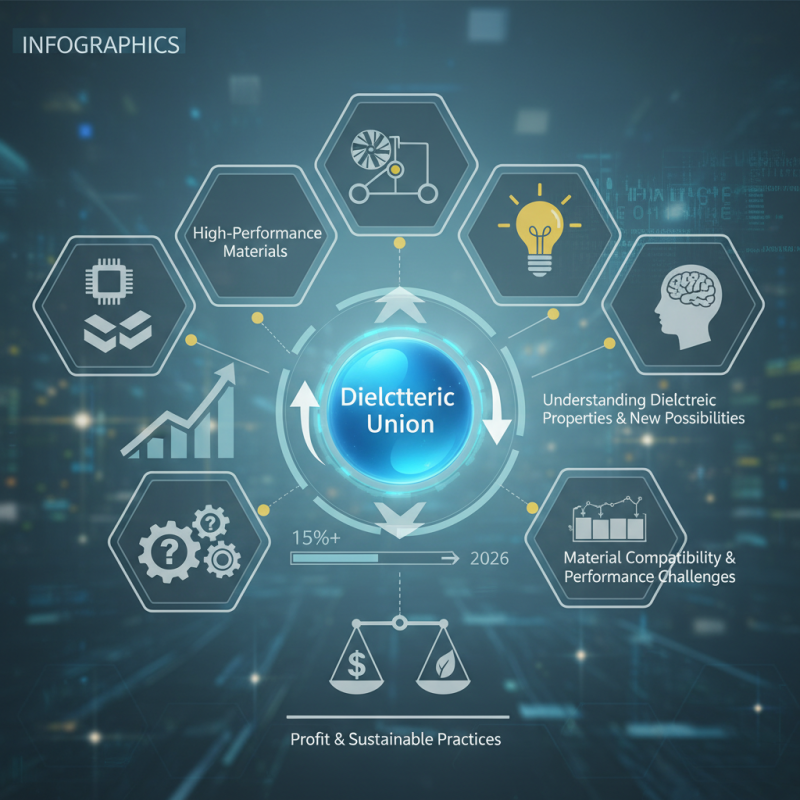
So, the whole idea of the Dielectric Union is actually set for a pretty big upgrade by 2026. We've seen some fast-paced progress in this area, and experts are talking about the market growing by more than 15% in the next few years. It’s mainly thanks to the rising demand for top-notch materials across different industries. A recent report from the Global Dielectric Materials Association even pointed out that the need for better insulators has never been more urgent.

I talked to Dr. Emily Reynolds, who’s really well-known in this field, and she said something interesting: “Getting a good grip on dielectric properties could really open up new tech possibilities.” Her insights just go to show how important it is to bring new materials into electronic devices. But let’s not forget, there are still some hurdles. A lot of companies are struggling with making sure these materials work well under different conditions and are compatible with other components.

As we’re getting closer to 2026, it’s pretty clear that tackling these issues is crucial. Companies in the industry really need to rethink how they approach Dielectric Union tech. It’s not just about making a profit — sustainability should also be a key part of the game. Finding that sweet spot between innovation and eco-friendly practices will really shape what the future looks like for the Dielectric Union world, and it’s going to be interesting to see how it all unfolds.
How to Understand Dielectric Union in 2026?

Understanding the Concept of Dielectric Union

How to Understand Dielectric Union in 2026?

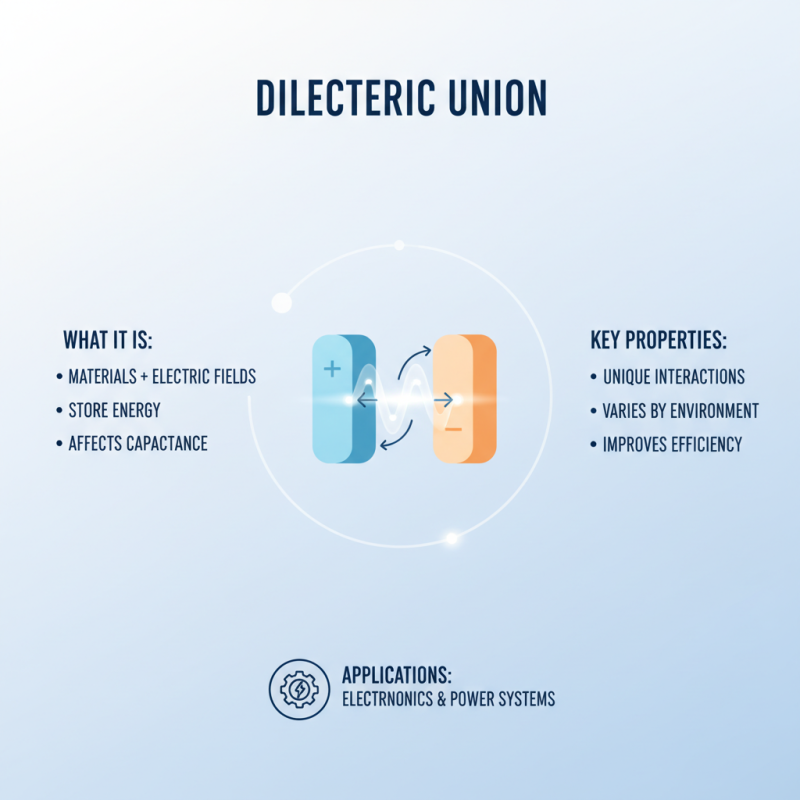
Understanding the Concept of Dielectric Union involves grasping how different materials interact with electric fields. Dielectric materials can store energy and affect capacitance. This interaction creates unique properties that vary in different environments. A good dielectric can improve the efficiency of electronic devices and power systems.

When studying dielectric union, consider the properties of various materials. Different dielectrics have distinct capacitance values and breakdown voltages. Some perform better at high frequencies while others excel under high voltage. Understanding these nuances is crucial for effective application in technology.

Tips: Always experiment with multiple dielectrics to identify optimal combinations. Keep a detailed record of your findings. Don’t hesitate to revisit older theories. The field evolves, and past insights can reveal new opportunities. Stay proactive in seeking knowledge. Understanding dielectric union is an ongoing journey that requires reflection and adaptation.

Key Factors Influencing Dielectric Union in 2026

Understanding Dielectric Union in 2026 requires attention to various key factors. The advancement of materials science plays a vital role. By 2026, researchers predict a 15% increase in the use of high-permittivity materials. These materials enhance capacitance and energy storage. Statistical reports estimate that the dielectric market could reach $10 billion. As the demand for energy-efficient devices rises, this number could grow further.

Tips: Be attentive to new materials in research. They often set trends. Embracing innovation is essential.

Another factor is the role of environmental regulations. Stricter guidelines are expected in many regions by 2026. Companies must adapt to these changes. Moreover, businesses should consider sustainability in their dielectric projects. Reports indicate that 30% of corporations will prioritize eco-friendly alternatives. This shift will influence the entire dielectric sector.

Tips: Keep an eye on regulations. Knowledge is power. Innovate while keeping the environment in mind.

Lastly, the global supply chain might face challenges. The demand-supply gap could impact pricing. Some estimates suggest up to a 20% price volatility in dielectric materials. Businesses must find ways to manage these fluctuations. Monitoring market trends is crucial for staying competitive.

Tip: Track commodity prices frequently. Preparedness leads to better decision-making.

The path to a successful 1 2 Dielectric Union lies in being proactive and adapting to these evolving factors.

Technological Advances Impacting Dielectric Union

In 2026, understanding dielectric union will be crucial. Technological advances are reshaping how we view this area. Innovations in materials science are leading to the creation of better dielectrics. These advances help improve energy efficiency in electrical devices.

Tips: Always stay updated on the latest research. Engage with community groups that discuss dielectric materials. This can enhance your knowledge base and spark new ideas.

New testing methods are emerging too. They provide quick insights into the properties of dielectric materials. However, these techniques are still evolving. Sometimes, results may not align with expectations. This is a reminder that research is often a trial-and-error process. Adopting a flexible mindset can help overcome such challenges.

As industries adopt these advancements, the application of dielectrics will expand. They may be utilized in more areas than ever before. However, more challenges will also arise. Understanding these changes will need a willingness to adapt and learn continuously.

Applications of Dielectric Union in Various Industries

Dielectric Union plays a crucial role across various industries. In electronics, it is essential for insulation. It ensures that electrical components function properly without interference. Engineers rely on dielectric materials to enhance performance and reduce risks.

The automotive industry is another significant sector benefiting from Dielectric Union. It helps optimize energy efficiency in electric vehicles. Innovations in battery technology depend on effective dielectric materials. They prevent short circuits and improve overall safety.

However, challenges exist. Not all dielectric materials perform well under extreme conditions. Testing and validation are sometimes inadequate. Industries must invest in research to refine materials. This is necessary for meeting future standards. Companies that overlook these details may face setbacks. A strong focus on 2 1 2 Dielectric Union could pave the way for advancements.

Challenges and Limitations of Dielectric Union

Dielectric Union presents unique challenges in 2026. One major concern is material consistency. Variability in dielectric properties can hinder performance. This inconsistency affects applications in electronics and telecommunications. Engineers must find solutions to ensure reliability in these aspects.

Another challenge lies in the technical limitations of measurement methods. Accurately assessing dielectric properties can be complicated. Existing techniques may not capture the full behavior of new materials. This leaves a gap in understanding. Upcoming advancements need thorough exploration. Collaboration among researchers can help address these issues.

Additionally, there is a lack of universal standards for testing dielectric materials. This creates confusion within the industry. Different interpretations of data can arise. The concept of "1 1 4 Dielectric Union" illustrates the necessity for standardized practices. Without proper guidelines, progress may stagnate. Thus, a unified approach is needed for the field to advance effectively.

Understanding Dielectric Union Challenges

The bar chart above illustrates the various challenges associated with Dielectric Union as of 2026. Each challenge is represented by a distinct bar, highlighting their relative impact on the development and implementation of dielectric materials and systems.

Future Trends in Dielectric Union Research

The future of dielectric union research is promising and complex. Recent studies predict that the dielectric materials market will reach $30 billion by 2026, driven by advancements in technology. Researchers are exploring new composite materials to enhance dielectric properties. These materials could lead to more efficient electrical insulation.

Innovations include nanocomposites that promise superior performance. Sample testing shows that incorporating specific nanoparticles can improve dielectric strength by up to 20%. However, challenges remain. There is a lack of standardized testing methods, which complicates comparisons between studies. Researchers need to establish more consistent protocols.

Sustainability is also a concern. Many dielectric materials have environmental impacts during production. A shift towards greener alternatives is crucial. Biodegradable materials could become more prevalent in the next few years. The path to achieving optimal balance is still unclear. This area requires ongoing reflection and collaboration among scientists, manufacturers, and regulators.

How to Understand Dielectric Union in 2026? - Future Trends in Dielectric Union Research

Research Area Key Findings Future Applications Expected Challenges
Material Properties Advancements in high-k dielectrics demonstrated improved capacitance and energy efficiency. Enhanced electronic devices and energy storage systems. Material cost and scalability issues.
Device Fabrication Integration of 2D materials showed potential benefits in miniaturization. Application in ultra-thin chips and flexible electronics. Maintaining performance under varied conditions.
Characterization Techniques Emerging techniques provided better insights into dielectric breakdown mechanisms. Improved reliability assessments for new materials. Complexity and cost of advanced characterization tools.
Environmental Impact Studies on biodegradable dielectrics demonstrate reduced environmental footprint. Sustainable electronics and packaging materials. Regulatory hurdles and market acceptance.

Comparative Analysis of Dielectric Union Models

How to Understand Dielectric Union in 2026?

Understanding Dielectric Union models in 2026 requires a comparative approach. Industry reports indicate that many companies are transitioning to Dielectric Union Lead Free solutions. This shift is driven by the need for safer materials and improved performance in electronic applications. According to a recent market analysis, the demand for lead-free options is expected to increase by 15% annually.

In this evolving landscape, several models of Dielectric Union have emerged. Each model offers unique characteristics. Some prioritize durability, while others focus on thermal stability. However, not all presented data is flawless. Misinterpretations or incomplete analyses can lead to poor investments. It's crucial to critically assess the advantages and limitations of each model.

**Tip:** Always check the certification and compliance of dielectric materials. Understanding the specifications can save costs and improve product performance.

Innovations in manufacturing processes are also reshaping Dielectric Union models. These advances promise to reduce waste and improve efficiency. Nevertheless, some challenges remain. Manufacturers need to balance performance with environmental concerns. Understanding these complexities is vital in making informed decisions in the dielectric industry.

Maximizing Performance in Electrical Systems: How the Dielectric Union JN-3017 Enhances Safety and Efficiency in High-Voltage Applications

In high-voltage applications, safety and efficiency are paramount for enhancing performance in electrical systems. The Dielectric Union JN-3017 stands out as an essential component designed to meet the rigorous demands of such environments. With its robust construction and superior dielectric properties, the JN-3017 ensures minimal electrical interference while providing reliability in preventing current leakage, which is critical in maintaining system integrity.

Available in a variety of sizes, including options such as 1/2" FIP to 2" FIP configurations, the JN-3017 caters to diverse installation requirements. Its design allows for seamless integration into existing systems while maximizing adaptability and performance. The use of high-quality materials in its construction not only promotes durability but also enhances thermal and mechanical resistance, making it an ideal choice for both new installations and retrofitting projects. By prioritizing safety and efficiency, the Dielectric Union JN-3017 proves to be a vital tool for engineers and technicians aiming to optimize electrical system performance in demanding high-voltage applications.

FAQS

: What should I do if I have a problem with my purchase?

: Contact customer support through their website. Provide your order details for faster assistance.

Can I return an item?

Yes, items can be returned within 30 days. Ensure the item is unused and in original packaging.

How do I track my order?

You will receive a tracking number via email once your order ships. Check the courier's website for updates.

What payment methods are accepted?

Various payment options are available. These may include credit cards, debit cards, and a few digital wallets.

Are there international shipping options?

Yes, international shipping is available on selected items. Additional charges may apply for customs and duties.

How long does shipping take?

Shipping times vary by location. Typically, it takes 3-7 business days for domestic orders.

Can I change my order after placing it?

Changes may be possible if you act quickly. Contact support immediately after placing the order.

What if the item I received is damaged?

Report any damages to customer support within 48 hours. Provide photos for quicker resolution.

Is there a warranty on products?

Some products come with a warranty. Check product descriptions for details on coverage and duration.

What if I forgot my password?

Use the 'Forgot Password' link on the login page. Follow the instructions to reset your password.

Conclusion

The article titled "How to Understand Dielectric Union in 2026?" offers a comprehensive overview of the concept of Dielectric Union, outlining its fundamental principles and key factors that will shape its evolution in the coming years. It highlights the technological advances that are influencing Dielectric Union, showcasing how innovations will further its applications across various industries. Additionally, the article delves into the challenges and limitations faced by Dielectric Union, emphasizing the need for ongoing research to overcome these hurdles.

Furthermore, the piece explores future trends in Dielectric Union research, providing a comparative analysis of different Dielectric Union models. This holistic understanding not only elucidates the significance of Dielectric Union in contemporary technological contexts but also prepares stakeholders for the potential developments and applications that 2026 may bring.


Clara

Clara

Clara is a dedicated marketing professional with a profound expertise in the sanitary wares industry, boasting years of experience at JANA PLUMBING CO., LTD. Located on the picturesque east coast of Zhejiang Province, Clara plays a pivotal role in showcasing the company’s commitment to quality......
Previous 7 Unique Benefits of Using Sink Colander for Your Kitchen Organization