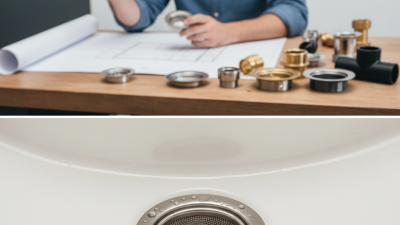
A bathtub strainer might be a tiny little fixture, but trust me, its fit and finish can seriously impact how well water drains, how easy it is to clean, and even your overall bathroom experience. This guide kicks off by introducing ten manufacturers from China—great for folks comparing options and looking for trustworthy suppliers. Just a heads-up though: it’s meant as a helpful starting point, not the final word. Tiny details really do matter here.
When you're checking out manufacturers, don’t just stop at product photos. Dig deeper—pay attention to the measurements, materials used, surface finishes, how the opening is designed, and whether it matches your Bathtub Drain setup. Always ask for clear drawings and a sample you can inspect for issues like rough edges, loose parts, or fit problems. Sometimes, these little things pop up only when you get your hands on the product, not just from pictures in a catalogue.
And don’t forget—it's super important to look for proof of quality too. Review their quality control processes, what their production capabilities are, any test records they can provide, and if they have experience exporting. Be sure to check that these details match the specific model you’re after, instead of assuming every product from a manufacturer is top-notch. Having a responsive sales contact helps, but it’s no substitute for clear specs and actually inspecting samples. No list of suppliers is 100% foolproof—so always do your homework.
These companies are pretty diverse—they can handle everything from standard replacement strainers to custom designs or larger-volume orders. Before you pull the trigger, compare things like lead times, packaging styles, customization options, and how easy it is to communicate with them. Keep in mind that supplier info and their product options can change over time—so double-check the latest details directly with each manufacturer. Use this overview to narrow things down, then make sure to verify that the products meet your specific project needs. So, take your time, do your research, and you’ll be good to go!
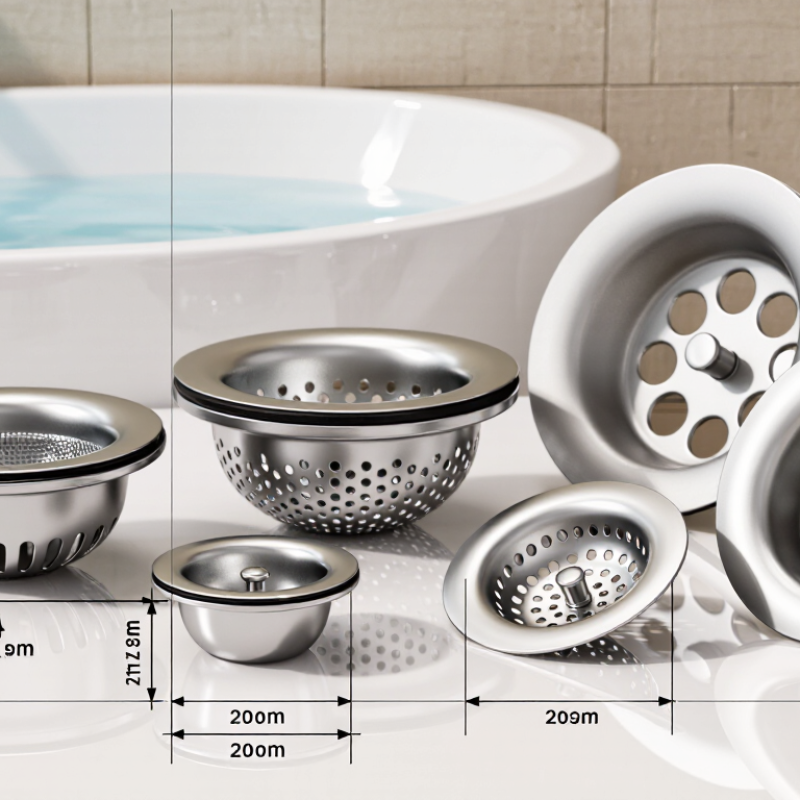
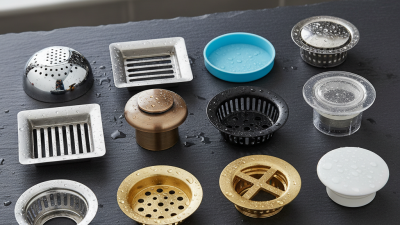
A Bathtub Strainer is a small fitting positioned over or inside the drain opening. Its holes let water pass while catching hair, lint, and small debris before they enter the drainpipe. Common designs include perforated covers, lift-out baskets, and stoppers with built-in screens. The right type depends on the drain shape, stopper mechanism, and opening size. Measure the drain rather than choosing by appearance alone. Small, but useful.
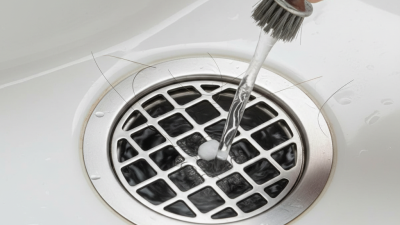
As water drains, debris collects on the strainer or inside its removable cup. This can make cleaning easier and reduce buildup deeper in the pipe, but it cannot prevent every blockage. Long hair may wrap around narrow slots, while soap residue can coat fine mesh. Rinse the strainer after bathing and remove trapped material before it dries. A soft brush helps. Avoid forcing a mismatched insert into place; it may slow drainage or interfere with the stopper.
Strainers are commonly made from stainless steel, plastic, or silicone. Metal can feel sturdy, while flexible silicone may grip the opening more easily. Check that the strainer sits level and does not wobble. One limitation is easy to miss: a very fine screen may drain slowly when covered with hair. There is a trade-off. Fit and regular cleaning often matter more than the material itself.
China’s bathtub strainer manufacturing industry serves plumbing brands, wholesalers, and project buyers with products in varied sizes and finishes. Manufacturers commonly work with stainless steel, brass, and molded components, depending on the required price point and use. Production may include stamping, machining, polishing, assembly, and surface treatment. The process looks straightforward, but a small dimensional mismatch can affect drainage or make installation frustrating. Small details matter.
For buyers, useful checks include material specifications, opening dimensions, finish consistency, and sample fit with the intended Bathtub Drain. Ask how suppliers inspect hole spacing, edges, and corrosion resistance. Clear drawings and measurable acceptance criteria help reduce misunderstandings between sampling and mass production. Some factories may offer customization, though tooling costs and lead times can vary. It is worth checking those details early. Capacity claims alone do not show whether quality stays consistent across batches.
Tips: Request a sample and test it with the actual drain before approving an order. Check for sharp edges, loose parts, and slow water flow. Keep inspection records; they can reveal patterns, though they will not prevent every defect.
When evaluating Chinese bathtub strainer manufacturers, examine process control, not just catalog photos. ISO’s 2023 Survey of Management System Standard Certifications counted about 1.27 million ISO 9001 certificates worldwide. That figure reflects certified management systems, not bathtub-strainer performance. Ask for a current certificate and confirm its scope covers the factory making your product. Then request material specifications, dimensional drawings, and recent inspection records.
Check the details that affect installation and daily use: drain diameter, thread fit, basket-hole size, surface finish, and overflow compatibility. For stainless-steel models, ask how the supplier verifies material grade; for plated parts, request coating-thickness and corrosion-test results. Compare a production sample with the approved drawing, including the underside and threads. A shiny finish can distract from a poor fit. No checklist catches everything, so verify measurements yourself or through an independent inspection.
China’s bathtub strainer sector includes manufacturers focused on casting, stamping, machining, and complete drain assemblies. These ten profiles are best read as a practical overview, not a fixed ranking. Each manufacturer may serve different buyers, from plumbing wholesalers to bathroom fixture producers.
When comparing suppliers, look closely at materials, production methods, and quality checks. Stainless steel and brass options can differ in corrosion resistance, finish, and cost. Ask how mesh openings are measured and whether samples are tested for fit with a Bathtub Pipe Drain. Small details matter. A strainer that looks polished in a catalog may sit unevenly in a real tub.
The profiles also help clarify differences in customization, order quantities, and export experience. Some factories may offer rapid sampling, while others prioritize larger production runs or varied surface finishes. Request current specifications, sample photos, and clear inspection records before drawing conclusions. Information can be incomplete, and online descriptions do not always reveal production consistency. That is worth checking. A careful comparison should leave room for questions, especially when dimensions or material grades are not stated plainly.
For buyers comparing bathtub strainer manufacturers in China, material choice affects durability, finish, and maintenance. Stainless steel resists everyday moisture, while brass offers a heavier feel and can be plated. ABS plastic is lightweight and economical, but its heat and impact limits should be checked. Silicone gaskets help seal the drain; poor sizing can cause slow leaks.
Production may include sheet-metal stamping, CNC machining, injection molding, polishing, and hand assembly. Ask how each factory controls dimensions and surface finish. Useful checks include fit testing with the intended drain, water-flow testing, corrosion screening, and repeated opening or removal cycles. Request material records and inspection results for the actual production batch, not only a sample. A polished sample can still hide inconsistent assembly. That is easy to overlook.
Tips: Send a drawing with drain dimensions and gasket details. For a Bathtub Drain Cupc listing, confirm what “Cupc” means and ask for supporting documentation; do not rely on the wording alone. Check samples under bathroom lighting, where scratches and uneven plating show clearly.
| Profile | Typical Product Focus | Common Materials | Typical Production Processes | Practical Quality Checks | Relevant Standards or References |
|---|---|---|---|---|---|
| 01 — Stainless-steel stamping specialist | Flat perforated bathtub strainers and removable screens | Commonly 304 stainless steel; 316 may be specified for higher corrosion resistance | Sheet blanking, die stamping, perforating, deburring, edge finishing, polishing | Verify material grade, hole size and distribution, flatness, burr-free edges, and fit in the drain opening | GB/T 3280 for cold-rolled stainless-steel sheet and strip; ISO 9001 for a supplier’s quality-management system |
| 02 — Deep-drawing and forming specialist | Cup-shaped strainers, baskets, and recessed drain inserts | 304 stainless steel sheet; other grades depend on the specification | Blanking, deep drawing, trimming, piercing, deburring, surface finishing | Check cup dimensions, wall thickness, cracks or wrinkles, drainage openings, and dimensional consistency | GB/T 3280 for stainless-steel sheet; inspection limits should be defined on the product drawing or purchase specification |
| 03 — Laser-cut stainless-steel fabricator | Custom-pattern, low-volume, or prototype strainers | 304 or 316 stainless steel sheet | Laser cutting, forming where required, edge deburring, brushing or polishing | Inspect cut dimensions, opening geometry, heat discoloration, sharp edges, and surface condition | GB/T 3280 for stainless-steel sheet; ISO 9001 may be used as a quality-management reference |
| 04 — CNC-machined metal component maker | Precision drain inserts, collars, and machined strainer components | Stainless steel or brass, selected to match the design and service environment | CNC turning or milling, drilling, deburring, polishing, optional coating | Check critical diameters, thread fit where applicable, concentricity, burrs, and coating coverage | GB/T 5231 covers chemical composition and product forms for wrought copper and copper alloys; applicable material requirements should be stated in the order |
| 05 — Brass forming and finishing specialist | Decorative strainers and metal components designed to coordinate with brass drain fittings | Brass alloys selected for the forming method and specified finish | Stamping or machining, polishing, cleaning, and optional nickel-chromium electroplating | Check base-metal condition, plating appearance and adhesion, edge coverage, and resistance to corrosion under the agreed test plan | EN 248 specifies requirements for electrodeposited nickel-chromium coatings on sanitary tapware; confirm its applicability to the specific component |
| 06 — Stainless-steel wire-forming producer | Basket inserts and coarse screens made from wire or mesh | Stainless-steel wire or woven stainless-steel mesh | Wire drawing or mesh sourcing, cutting, forming, joining, finishing | Inspect mesh aperture, wire integrity, joint quality, shape retention, and sharp or protruding wire ends | Material and mesh acceptance criteria should be set in the product specification; ISO 9001 is a quality-management-system reference, not a product certification |
| 07 — Plastic injection-molding producer | Lightweight strainers, removable baskets, and polymer screen components | Common engineering or commodity thermoplastics selected for the design and intended use | Injection molding, gate trimming, dimensional inspection, optional assembly | Check dimensions, molding defects, warpage, drainage openings, fit, and performance after repeated removal and cleaning | Material grade and any chemical or temperature requirements should be specified by the buyer; do not assume a generic plastic grade is suitable for every application |
| 08 — Multi-process assembly producer | Strainer assemblies combining a metal cover, basket, and removable insert | Typically stainless steel, brass, or a combination of metal and polymer parts | Stamping or molding of parts, surface finishing, component assembly, final inspection | Check part compatibility, secure assembly, ease of removal, drainage, and absence of rattling or sharp edges | ISO 9001 may support documented process controls; product-specific acceptance criteria should be agreed between buyer and supplier |
| 09 — Polishing and surface-finishing specialist | Visible decorative covers and strainers requiring a consistent surface appearance | Usually stainless steel or brass, depending on the finish and product construction | Mechanical polishing, brushing, cleaning, passivation where specified, or electroplating for applicable designs | Assess finish uniformity, scratches, discoloration, residue, edge quality, and corrosion-test results against agreed limits | ISO 9227 describes salt-spray corrosion testing; it does not by itself define a universal pass/fail requirement for bathtub strainers |
| 10 — OEM and custom-design supplier | Buyer-specified sizes, hole patterns, finishes, packaging, and assembled drain components | Material chosen to the approved drawing and bill of materials, often stainless steel, brass, or plastic | Processes selected per design, commonly stamping, machining, molding, finishing, and assembly | Use approved samples, drawing-based inspection, material verification, batch traceability, and documented final checks | ISO 9001 is a management-system standard; verify any claimed certification and confirm the certified site and scope independently |
Scope note: These are representative manufacturing capability profiles, not named companies or a verified ranking of China-based manufacturers. Materials, processes, and standards vary by design and contract; standards listed are references and do not imply that every product is certified or compliant.
Safe sourcing begins with a clear product specification, not a polished catalog photo. Ask each potential supplier for drawings, dimensions, material grades, surface-finish details, and compatibility information for different bathtub outlets. Clarify whether the quotation covers only strainers or complete Bathtub Drain Kits. Small details matter. A few millimeters can affect fit, while a rough finish may collect residue or look poor after installation.
Request samples before approving a production order. Fit each sample to a real tub or a matching test fixture, and check the basket, stopper, threads, and overflow connection. Ask how the supplier checks corrosion resistance and dimensional consistency, then review the actual test method or inspection record. Verify the company’s business details and production capability, preferably through a live factory walkthrough or an independent inspection. A catalog is not proof of capacity.
Put approved specifications, sample references, packaging, defect limits, and delivery milestones in writing. Arrange a pre-shipment inspection against the approved sample, especially for finish quality and thread fit. Use secure payment terms tied to clear order milestones, and keep records of messages and inspection results. Even a careful checklist can miss something; packaging damage is an easy detail to overlook. Ask for carton photos and a packing test, then confirm spare-part handling before the goods leave the factory.
The 2024 Houzz U.S. Kitchen Trends Study reports that median spending on major kitchen remodels reached $55,000 for larger kitchens, highlighting how much homeowners invest in durable, practical upgrades. In that context, sink components deserve attention alongside visible choices such as cabinetry and countertops: reliable drainage and effective debris capture help keep a busy kitchen working smoothly. A well-designed basket strainer can support everyday cleanup while protecting the drain from food scraps.
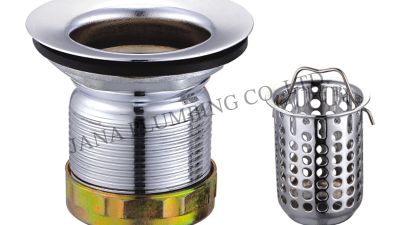
The Deep Junior Duo Basket Strainer JN-1205 is designed for demanding commercial and industrial filtration applications, with durable construction intended to provide dependable, long-lasting performance. Its dual-basket design offers a practical option for managing debris, while cUPC certification provides an added specification for project planning. For kitchen upgrades where function matters as much as appearance, selecting a robust strainer can help make the sink area more useful and resilient over time.
Common options include stainless steel, brass, and ABS plastic. Silicone gaskets may help seal the drain. Each material has trade-offs.
Check its dimensions, finish, sharp edges, loose parts, and fit with the actual drain. Run water through it. Slow flow matters.
Send the supplier a drawing with outlet dimensions and gasket details. Test the sample on a real tub or matching fixture. A few millimeters can matter.
Ask about dimensional inspections, finish checks, water-flow tests, corrosion screening, and repeated removal cycles. Request records from the actual production batch.
Review its business details and arrange a live factory walkthrough or independent inspection. A catalog photo proves little.
Record approved dimensions, materials, finish, sample references, packaging, defect limits, and delivery milestones. Keep inspection records too.
Compare the goods with the approved sample before shipment. Check thread fit and plating under bathroom lighting, where scratches show clearly.
Confirm whether the quotation covers strainers alone or complete drain kits. Ask for carton photos and spare-part details. Still, a checklist can miss something. Reflect on what it does not cover.
This article explains what a Bathtub Strainer does, how it helps catch hair and debris while allowing water to drain, and why it matters in a well-functioning bathroom. It offers an overview of China’s bathtub strainer manufacturing industry and outlines practical ways to assess potential suppliers, including their product range, manufacturing capabilities, communication, and ability to meet project requirements. The article also introduces ten leading manufacturers as examples for buyers to research and compare.
Readers will learn about common materials, production processes, and quality considerations that can affect durability, fit, and performance. The final section provides guidance for sourcing bathtub strainers from China safely, from clarifying specifications and requesting samples to confirming quality expectations and documenting order details. Together, these topics give buyers a useful starting point for comparing suppliers and making informed purchasing decisions.