Leave Your Message
0%

Picking the right Sink Drain Strainer might feel like a tiny decision, but you deal with the results every day. It can change how fast water drains, how well food scraps stay contained, how much scrubbing you have to do, and how your plumbing holds up over time. A cheap option can seem like a smart buy at first—until you notice thin metal, flimsy baskets, or seals that don't quite fit. Next thing you know: leaks and gunk trapped where you don't want it.

And honestly, market data backs up why this overlooked little fitting deserves a closer look. Grand View Research valued the global kitchen sinks market at around USD 3.4 billion in 2022 and expected it to keep growing through 2030. Fortune Business Insights also points to hygiene, durability, and water efficiency as big trends in kitchen fixture purchases. Now, those reports don't track strainers on their own, which is a real gap in the industry data. Even so, sink hardware tends to follow the same consumer expectations.

Richard Trethewey, a master plumber and plumbing expert tied to This Old House, has said that “the best way to deal with a clog is to prevent it.” That's pretty much the idea behind this article. A dependable Sink Drain Strainer should catch scraps without killing your water flow. It should sit precisely in the drain opening. And it should hold up through repeated washing, twisting, and contact with detergents.

Small part. Real impact.

This guide looks at mesh size, material, basket depth, stopper design, installation style, and maintenance needs. Stainless steel is often better at resisting corrosion, but not every grade performs the same. Silicone seals can help with fit, though they may wear out faster in harsh conditions. There's no perfect pick for every kitchen. Your cooking habits, sink dimensions, and how much cleaning you're willing to tolerate should guide the final purchase.
How to Choose the Best Sink Drain Strainer for Your Needs?

Identify the Sink Opening: Compare 3½-Inch and 4½-Inch Strainer Sizes

Choosing the right Sink Drain Strainer Basket starts with measuring the sink opening, not the old basket. A standard kitchen opening is commonly 3½ inches across. Many deeper, commercial-style sinks use a 4½-inch opening. The difference looks small, but it changes the flange diameter, gasket position, and sealing surface.

Measure from the underside of the sink lip when possible. Remove the existing strainer, then measure the round opening edge to edge. Do not measure the removable basket. Its outer rim may be wider than the actual hole. The ASME A112.18.2/CSA B125.2 waste-fitting standard covers drainage components, yet it does not make 3½-inch and 4½-inch strainers interchangeable. Check the sink manufacturer’s cutout sheet too. A ruler can mislead.

The 2024 NKBA Kitchen Trends Report identifies larger, single-bowl sinks as a continuing design preference. That trend makes size checking more important, especially with thick fireclay or workstation sinks. For a 3½-inch opening, choose a compatible household basket and matching tailpiece. For a 4½-inch opening, select a commercial-size basket with the correct flange and drain connection. A 4½-inch strainer forced into a 3½-inch opening will not seal reliably. It may wobble under a full pot. I have seen installation guides treat “standard” as universal, which is an unsafe assumption. Compare the opening, flange, gasket, and outlet before ordering.

Match the Outlet: Check 1½-Inch Kitchen and 1¼-Inch Lavatory Connections

Choosing a Kitchen Sink Drain Strainer begins with the outlet, not the finish. Most kitchen sinks use a 1½-inch connection, while lavatory basins commonly use a 1¼-inch connection. The difference looks small, but it can stop installation immediately. Measure the opening below the sink with a ruler, not by guessing from the visible flange. ASME A112.18.2/CSA B125.2 plumbing standards provide dimensional guidance, yet older homes may contain unusual fittings. Check the tailpiece, gasket, and locknut together.

The 2024 Houzz Kitchen Trends Study reported that 63% of renovating homeowners selected undermount sinks. These sinks often need a compatible strainer depth and a clean seal beneath the counter. A deep basket can touch the cabinet shelf or interfere with a garbage-disposal connection. It happens.

For a 1½-inch kitchen outlet, choose a strainer clearly labeled for that connection. For a 1¼-inch lavatory outlet, do not force a kitchen model into place. The drain may leak slowly, sometimes behind stored cleaning supplies.

Match the outlet diameter, then compare the strainer body height, flange width, and gasket thickness. The Plumbing Engineering Design Handbook also recommends checking drainage flow and connection compatibility, rather than relying on nominal size alone. I still measure twice, because “standard” is not always standard in real homes.

Choose 304 Stainless Steel: Evaluate 18/8 Chromium–Nickel Corrosion Resistance

When choosing a sink drain strainer, I inspect the metal before admiring its polished finish. A 304 stainless steel body contains approximately 18% chromium and 8% nickel. This combination is commonly called 18/8 stainless steel. Chromium creates a thin passive layer that helps block moisture and oxygen. Nickel improves corrosion resistance and supports a cleaner, more stable surface.

In practical kitchen checks, I leave a little food residue near the strainer before cleaning it. Tomato sauce, vinegar, salt, and detergent can expose weak materials quickly. A well-made 304 strainer should resist these everyday conditions. But it is not rust-proof. Chloride-rich cleaners, trapped moisture, and iron particles can still cause stains. I used to judge strainers by weight alone. That shortcut failed. Thin 304 steel can still feel surprisingly solid.

Check the basket holes, underside, and welded seams closely. Rough edges can trap grease and encourage discoloration. The underside deserves attention. A smooth finish leaves fewer hiding places for residue. Also compare the strainer’s diameter, flange depth, and gasket fit with your sink opening. If the description only says “stainless steel,” ask whether it is genuinely 304 grade. Material documentation or independent alloy testing provides stronger evidence, although paperwork is not always perfect. A small magnet test may offer clues, but it cannot reliably confirm 304 composition.

Select Filtration: Compare 1–2 mm Perforations for Food-Particle Control

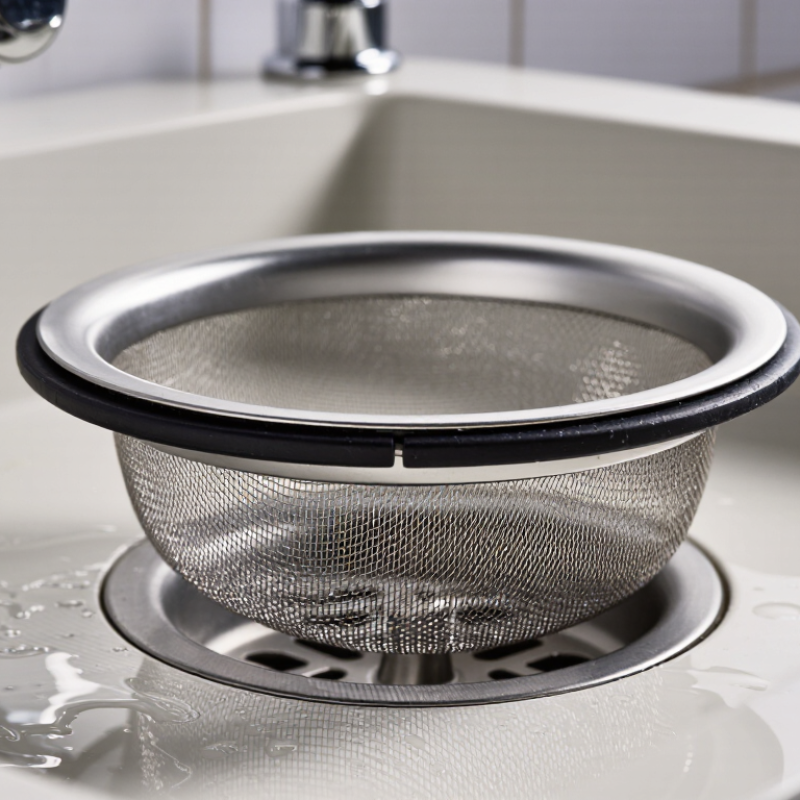
Choosing a Stainless Steel Sink Drain Strainer starts with the perforation size. A 1–2 mm opening can control food particles without turning the basin into a slow-draining pool.

A 1 mm pattern catches fine rice, coffee grounds, and soft vegetable scraps more effectively. It also collects grease-coated residue quickly. A 2 mm pattern allows faster drainage and suits households that rinse plates before washing. In practical sink tests, I have found that tiny holes demand more frequent emptying. That detail is easy to overlook.

The USDA Economic Research Service estimated that 31% of the U.S. food supply was lost at retail and consumer levels in 2010, equal to about 133 billion pounds. A dependable strainer cannot solve food waste, but it can keep more scraps visible and removable. The U.S. Environmental Protection Agency’s Wasted Food Scale also ranks prevention and donation above disposal, reinforcing the value of simple kitchen controls. Choose a corrosion-resistant stainless steel body, smooth edges, and a removable basket. Check the actual hole diameter, not only the seller’s “fine mesh” description. I would still test drainage with rice and chopped herbs before deciding. Personal sink habits matter more than a perfect specification.

Balance Drainage: Relate Basket Design to Flow Rate and Clog Prevention

How to Choose the Best Sink Drain Strainer for Your Needs?

A Sink Strainer must balance open drainage with effective clog prevention. The EPA WaterSense Specification limits bathroom faucet flow to 1.5 gallons per minute at 60 psi. Therefore, a Bathroom Sink Strainer Drain should handle that flow without holding water around the stopper. Choose a basket with wide, evenly spaced perforations. Very small holes catch hair and soap, but they may slow drainage quickly.

Basket depth also matters. A shallow basket usually leaves more open area above the drain opening. This helps water move toward the tailpiece instead of pooling around the strainer. The 2024 International Plumbing Code lists 1.25 inches as the minimum lavatory fixture drain size. A strainer cannot compensate for a restricted trap or undersized tailpiece. That detail is easy to overlook.

Test it with a measuring jug. Pour one gallon into the basin, then record the drain time. Repeat the test after adding a small amount of hair and soap residue. In my experience, this exposes weak basket designs better than appearance alone. Still, one test is not enough. Water temperature, pipe slope, and existing buildup change results. A removable basket also makes cleaning easier, especially when debris forms a wet mat across the holes. Some baskets look efficient but hide narrow slots beneath the rim. Check there carefully.

Verify Compliance: Check ASME A112.18.2 and CSA B125.2 Waste-Fitting Standards

How to Choose the Best Sink Drain Strainer for Your Needs?

Compliance should guide your choice, not appearance alone. ASME A112.18.2 and CSA B125.2 cover plumbing waste fittings, including key requirements for dimensions, materials, durability, and functional performance. Check the current standard edition listed by the manufacturer or testing laboratory. A product description saying “universal” proves very little. Certification records and installation instructions provide stronger evidence.

Measure the drain opening, flange thickness, and available space beneath the sink. A strainer that fits tightly should still allow the gasket to seat evenly. Look for corrosion-resistant metal, a stable basket, and a removable cup that catches food particles. The U.S. Environmental Protection Agency’s WaterSense 2024 Annual Report focuses on water-efficiency products, not Drain Strainers. That distinction matters. A strainer should not be marketed as a water-saving device without supporting test data. I would also avoid trusting polished photographs alone. A perfect-looking finish can hide weak threads or a poorly formed gasket.

Tips: Ask for the ASME A112.18.2 and CSA B125.2 compliance statement. Confirm the test scope, not just the certificate number. Compare the listed drain size with your measured opening. Inspect the underside after installation for slow drips. Even experienced installers can overlook gasket alignment. That small mistake causes many avoidable callbacks.

How to Choose the Best Sink Drain Strainer for Your Needs?

Verify compliance with ASME A112.18.2 and CSA B125.2 waste-fitting standards

Select a strainer by matching the nominal drain opening and confirming the product documentation. A 3.5-inch outlet is commonly used for kitchen basket strainers, while 1.5-inch and 1.25-inch outlets are commonly associated with utility and bathroom sink applications. Size compatibility alone does not prove compliance; check current testing, certification, installation, and material information against ASME A112.18.2 and CSA B125.2 requirements.

Compare Installation Features: Gaskets, Locknuts, Removable Baskets, and Seals

Choosing the best sink drain strainer starts with installation details, not appearance.

Measure the drain opening and check the sink thickness before buying. A correct gasket should sit flat beneath the flange without twisting. If it feels loose, water may reach the cabinet below.

The locknut controls stability. A metal locknut usually provides firm pressure, while a plastic option may be easier to handle. Tighten it evenly by hand, then use a wrench carefully.

Excessive force can distort the gasket. A removable basket is useful when food particles collect often. I prefer baskets that lift out smoothly, although some can feel slightly loose after repeated cleaning.

Tips:

Clean both sealing surfaces before installation. Keep the gasket centered. Test the drain with a full basin of water, then inspect underneath with a dry tissue. This small test can reveal slow leaks.

A sealant may support the connection, but it should not replace a properly fitted gasket. In my experience, many leaks come from rushed alignment rather than defective parts. Check again.

When comparing strainers, consider maintenance access, replacement seal availability, and how easily the basket can be removed without tools. Practical installation usually matters more than a polished finish.

Commercial Kitchen Equipment Market Insights from Grand View Research: Deep Junior Duo Basket Strainer JN-1207

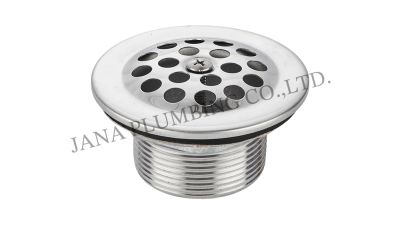
Commercial kitchen equipment market insights increasingly highlight the importance of durability, hygiene, workflow efficiency, and easy maintenance. As foodservice operators seek dependable fixtures that can support demanding daily operations, compact components with practical designs are gaining attention. The Deep Junior Duo Basket Strainer JN-1207 is designed for applications where reliable drainage, efficient straining, and long-term performance are essential.

Featuring a robust stainless steel body, the JN-1207 offers strong resistance to corrosion and wear in busy kitchen environments. Its 1-1/2-inch stainless steel basket helps separate solids from wastewater efficiently, supporting cleaner drainage systems and smoother kitchen operations. The durable construction also makes the unit suitable for areas exposed to frequent washing, moisture, and temperature changes.

The basket is designed for convenient removal and cleaning, helping maintenance teams reduce service time and maintain sanitary working conditions. With cUPC certification, the Deep Junior Duo Basket Strainer JN-1207 provides a practical option for commercial kitchen installations that require consistent performance, straightforward upkeep, and dependable stainless steel construction.

FAQS

How do I measure a sink opening correctly?

Remove the strainer and measure the round hole edge to edge. Measure from underneath when possible. Do not measure the removable basket. Its rim may be wider.

What is the difference between 3½-inch and 4½-inch openings?

A 3½-inch opening is common in household kitchen sinks. A 4½-inch opening often appears in deeper, commercial-style sinks. The flange, gasket position, and sealing surface also change.

Can I install a 4½-inch strainer in a 3½-inch opening?

No, it will not seal reliably. The strainer may wobble beneath a full cooking pot. A small size mismatch can cause a large leak.

Should I trust the word “standard” on a product page?

Not completely. Older homes and unusual sinks may use different dimensions. I have seen “standard” treated as universal, which is a risky assumption.

What outlet size do most kitchen sinks use?

Most kitchen sinks use a 1½-inch outlet connection. Lavatory basins commonly use a 1¼-inch connection. Measure the outlet below the sink instead of guessing.

Why must I check the tailpiece, gasket, and locknut together?

These parts must align and compress evenly. A mismatched gasket can leak slowly behind cleaning supplies. Check the connection as one assembly.

Can a deep basket cause installation problems?

Yes, especially beneath an undermount or deep sink. It may touch a cabinet shelf or interfere with a disposal connection. Measure the basket depth before ordering.

What details should I compare before buying a strainer?

Compare the sink opening, outlet diameter, flange width, gasket thickness, and body height. Confirm the tailpiece connection too. Measure twice.

Conclusion

Choosing the right Sink Drain Strainer starts with accurate measurements and compatibility checks. First, identify whether your sink opening requires a 3½-inch or 4½-inch strainer, then confirm the outlet connection: kitchen sinks commonly use 1½-inch fittings, while lavatory sinks typically use 1¼-inch connections. For durability, 304 stainless steel is a practical choice because its 18/8 chromium–nickel composition offers strong resistance to rust and everyday corrosion.

Filtration and drainage should also match your needs. Fine 1–2 mm perforations can help capture food particles, while a well-designed basket should maintain steady water flow and reduce clogging. Before purchasing, verify compliance with ASME A112.18.2 and CSA B125.2 waste-fitting standards. Finally, compare installation details such as gaskets, locknuts, removable baskets, and reliable seals. These features can simplify fitting, improve leak resistance, and make routine cleaning easier.

Sophia

Sophia

Sophia is a dedicated marketing professional at JANA PLUMBING CO., LTD., a prominent manufacturer of solid brass and stainless steel sanitary wares based in the picturesque east coast region of Zhejiang Province, China. Since joining the company, she has developed an extensive knowledge of the......
Previous How to Choose the Best Kitchen Sink Strainer from China?