China’s meter fitting industry serves water, gas, heating, and industrial measurement projects worldwide. A reliable Meter Coupling must connect meters securely while maintaining alignment and leak resistance. Small dimensional errors can create installation delays, damaged threads, or repeated service calls.
This guide examines Chinese manufacturers, suppliers, and price factors from a practical purchasing perspective. It considers brass, stainless steel, and engineered polymer options. It also reviews thread types, connection sizes, sealing methods, surface finishing, and packaging quality. Experienced buyers usually request material certificates, dimensional drawings, sample approvals, and pressure-test records before placing larger orders. Factory audits can also reveal important details, including machining cleanliness, inspection tools, and production consistency.
Prices vary with material grade, order volume, customization, plating, testing, and shipping terms. A low quotation can look attractive, but it may exclude tooling, certification, or protective packaging. Ask for a complete commercial offer. No supplier list is perfect. Market rankings can change as factories adjust capacity, export focus, or quality systems. Some suppliers communicate quickly but provide limited technical evidence. Others offer stronger documentation but slower sample development. That difference matters during urgent projects. Buyers should compare verified specifications instead of relying on catalog photos or general claims. The most suitable supplier is not always the cheapest one. Careful comparison supports safer procurement, stable installation, and more predictable long-term maintenance costs.
Meter Couplings connect a water meter to the service line and preserve a leak-resistant flow path. Their purpose seems simple. Their tolerances are not.
A Compression Coupling joins pipes by tightening a nut around a sealing ring. It needs no welding and usually requires limited installation space. Threaded, flanged, and push-fit designs serve different meter bodies and pipe materials. A field technician should check connection size, pressure rating, temperature range, and seal compatibility before installation. Poor alignment can stress the meter and distort readings. That detail is easy to miss.
The U.S. Environmental Protection Agency estimates household leaks waste nearly 1 trillion gallons of water annually. Reliable meter connections help utilities detect unusual consumption earlier. The World Bank reported that global non-revenue water exceeded 48 billion cubic meters yearly in its widely cited assessment. Couplings cannot solve distribution losses alone. They can, however, reduce avoidable leakage at the meter point. AWWA Manual M22 also emphasizes accurate meter installation and suitable straight-pipe conditions. Price comparisons should include material, certification, service life, and replacement labor, not only the purchase price.
Tips: Measure the meter tailpiece first. Inspect threads for damage. Use the specified gasket. Tighten gradually. Then perform a pressure test and inspect the joint after several minutes. Field conditions often differ from drawings. Rechecking remains worthwhile.
Meter couplings connect flow meters to service lines while allowing inspection, replacement, and accurate alignment. Their design affects sealing performance, installation time, and maintenance costs. Common types include threaded, compression, flanged, union, and dielectric couplings.
Threaded couplings suit compact metal piping and moderate pressure applications. They need careful thread engagement and suitable sealing materials. Compression Couplings use nuts, sleeves, and ferrules, making them practical for faster field installation. They can tolerate slight pipe movement, but poor tightening may cause leaks. Flanged couplings support larger meters and industrial pipelines. Bolts must be tightened evenly to prevent uneven gasket loading. Union couplings are useful where technicians frequently remove meters. Dielectric couplings separate dissimilar metals and help reduce galvanic corrosion in utility systems.
Material selection should match pressure, temperature, fluid chemistry, and pipe material. Stainless steel offers strong corrosion resistance, while brass can suit many potable-water installations. Plastic options may reduce weight but require careful torque control. In practice, no coupling is perfect. A fitting that works well on a clean indoor line may fail in wet, vibrating conditions. This assumption often gets overlooked.
Purchase prices reflect material grade, connection size, pressure rating, machining accuracy, and certification requirements. A low quote can hide weak gaskets or inconsistent dimensions. Experienced buyers check thread standards, test records, spare-part availability, and installation instructions before approval. Field teams should inspect sealing faces and confirm alignment before commissioning. Even a small offset can stress the meter body.
Reliable meter couplings begin with standards, not attractive packaging. For potable water systems, buyers should verify compliance with applicable pressure, thread, and material requirements. Common references include ISO, EN, ASTM, and local utility specifications. The correct standard depends on the meter body, service pressure, and installation region. Ask for test records. Do not rely on a catalog sentence alone.
Material selection affects service life. Brass offers strength and stable threading, while stainless steel resists many corrosive environments. Engineering plastics can reduce weight, but temperature limits require careful review. A 3 Compression Coupling should provide even sealing across the pipe, without excessive tightening. I have seen installers damage threads by using force as a substitute for alignment. That mistake is easy to repeat. Check dimensions, gasket quality, and pressure ratings before shipment. Threads must engage smoothly. No binding. Reliable suppliers also provide traceable batch information, inspection data, and clear installation instructions. These details make price comparisons more meaningful. The cheapest coupling may become expensive after leaks, retesting, and field replacement. Yet specifications are not perfect. Site water chemistry and installer practice can change actual performance. Leave room for verification.
| Meter Size | Typical Connection | Common Coupling Configuration | Primary Materials | Seal Material | Typical Working Pressure | Applicable Thread Standard | Indicative Bulk Price (USD / Set) | Recommended Use |
|---|---|---|---|---|---|---|---|---|
| DN15 / 1/2 in | G 3/4 × G 1/2 or NPSM 3/4 × NPSM 1/2 | Straight union, two nuts, two tails and washers | Forged brass or stainless steel 304 | EPDM, potable-water grade | Up to 1.6 MPa, design dependent | ISO 228-1 for parallel threads; ASME B1.20.1 for NPT/NPS interfaces | $1.20–$4.50 | Residential cold-water meters and compact manifolds |
| DN20 / 3/4 in | G 1 × G 3/4 or NPSM 1 × NPSM 3/4 | Removable union coupling with flat-face sealing | Low-lead brass, dezincification-resistant brass or stainless steel 316 | EPDM or NBR | Up to 1.6 MPa, design dependent | ISO 228-1, ISO 7-1 / EN 10226-1, or ASME B1.20.1 according to interface | $1.60–$5.80 | Most common residential and light commercial installations |
| DN25 / 1 in | G 1 1/4 × G 1 or NPT equivalent | Heavy-duty meter union with extended tail pieces | Forged brass or stainless steel 304 | EPDM, NBR or PTFE where chemically appropriate | Up to 1.6 MPa, design dependent | ISO 228-1, ISO 7-1 / EN 10226-1, or ASME B1.20.1 | $2.40–$8.50 | Small commercial buildings and irrigation systems |
| DN32 / 1 1/4 in | G 1 1/2 × G 1 1/4 or flanged transition | Union coupling with threaded or flanged tails | DZR brass, stainless steel 304 or ductile iron | EPDM | 1.0–1.6 MPa, depending on body and connection design | ISO 228-1 or flange dimensions specified by the project | $5.00–$16.00 | Commercial water distribution and pump-room assemblies |
| DN40 / 1 1/2 in | G 2 × G 1 1/2 or flanged connection | Large-size dismantling union or flange adapter set | Ductile iron, stainless steel 304/316 or coated carbon steel | EPDM or NBR | 1.0–1.6 MPa, subject to coating and flange rating | ISO 7005 / EN 1092-2 for flanges; threaded variants use the specified thread standard | $12.00–$38.00 | Industrial, municipal and high-flow metering systems |
| DN50 / 2 in | Flanged meter connection | Flange adapter or dismantling joint with gasket and fasteners | Ductile iron, stainless steel 316 or epoxy-coated steel | EPDM or NBR | 1.0–1.6 MPa, according to the specified pressure class | ISO 7005 / EN 1092-2; ASME B16.5 where ASME flanges are required | $18.00–$65.00 | Municipal networks, process water and fire-water systems |
| DN65–DN100 | Flanged connection | Dismantling joint, flange adaptor or restrained coupling | Ductile iron, stainless steel 316 or coated ductile iron | EPDM, selected for potable-water compatibility | 1.0–1.6 MPa, depending on pressure class | ISO 7005 / EN 1092-2 or ASME B16.5, as specified | $45.00–$180.00 | Large commercial, municipal and industrial water-meter installations |
Leading China meter coupling manufacturers and suppliers serve water, gas, and industrial measurement projects. They commonly produce brass, stainless steel, and reinforced polymer fittings for different installation conditions. Factory experience matters. Engineers review thread accuracy, sealing surfaces, pressure ratings, and material certificates before approving a coupling. For a 4 Compression Coupling, correct tube preparation is especially important because uneven cuts can cause leaks. Small errors remain costly.
Reliable suppliers usually support drawings, sample checks, batch testing, and traceable inspection records. Ask for dimensional tolerances, connection standards, working temperature, and packaging details. Prices vary with alloy grade, machining volume, plating, testing, and order quantity. A low quotation may hide thinner walls or limited quality control. That risk deserves attention. Some factories communicate quickly but provide incomplete technical files. This is not always a failure, yet buyers should request corrections before production.
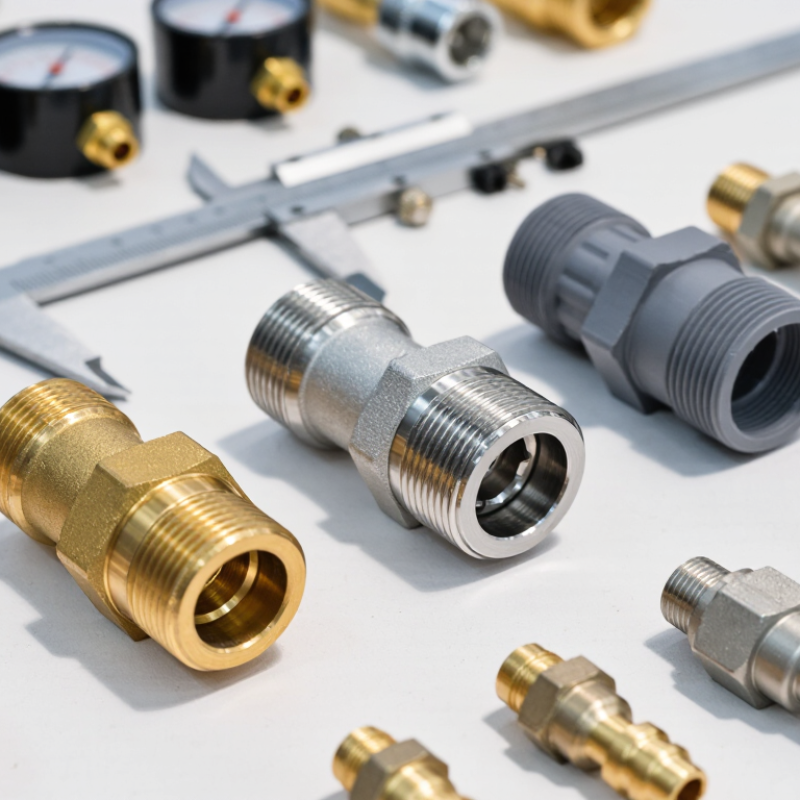
Experienced purchasing teams compare several China suppliers against the same specification, not price alone. They may inspect samples with calipers, check thread engagement, and simulate installation torque. Field feedback also reveals practical issues, such as damaged threads or seals that harden during storage. Good manufacturers respond with revised tooling, clearer instructions, and documented corrective actions. That response builds trust. Still, every shipment needs inspection. Meter connections sit in demanding systems, so dependable consistency matters more than impressive promises.
China Top Meter Coupling Manufacturers Suppliers and Prices
How to Compare Meter Coupling Prices in China
Comparing Chinese meter coupling prices requires more than checking the unit quote. Match identical specifications first. Record diameter, thread standard, material grade, pressure rating, gasket type, and surface treatment. A Steel Compression Coupling may cost more than a basic fitting, but it can provide stronger mechanical resistance. Ask suppliers for dimensional drawings, inspection records, and sample photographs. Small differences matter. A two-millimeter thread mismatch can delay installation.
The World Bank Commodity Markets Outlook reported weaker iron ore prices during 2024, affecting some steel input costs. However, coupling prices also depend on machining time, order quantity, tooling, packaging, and delivery terms. UN Comtrade data for HS 7307 shows broad international trade in Pipe Fittings, but this category includes many products. It cannot prove one supplier is cheaper. Use it as market context, not a final benchmark. Request prices under the same Incoterm, such as FOB or CIF. Include customs, inland transport, testing, and payment charges. Experienced buyers often compare landed cost per usable piece. Not just factory price.
In practical audits, I would request three samples from each shortlisted supplier. Measure thread accuracy, wall thickness, sealing performance, and visible burrs. Then repeat the test after pressure cycling. This takes time. It also exposes attractive quotes with weak consistency. Some quotations remain unclear about metal composition or gasket certification. That is a warning, though not automatic proof of poor quality. Supplier comparison should stay evidence-based and open to correction.
The chart compares indicative wholesale price ranges in China for common meter coupling specifications. Prices are shown in RMB per set and vary according to material grade, connection standard, order volume, surface treatment, packaging, and delivery terms. These figures are market reference ranges rather than quotations from any specific company or brand.
Choosing reliable meter coupling manufacturers in China requires more than comparing prices. Quality begins with stable materials, accurate machining, and consistent thread dimensions. A coupling should fit firmly without damaging the meter connection. Ask suppliers for dimensional reports, pressure test records, and material certificates. Sample inspection matters. Photos alone can hide rough threads or uneven sealing surfaces.
Customization may include thread standards, body length, sealing materials, logos, and packaging. Experienced suppliers should confirm drawings before production. They should also explain tolerance limits clearly. A low quotation can seem attractive, but weak inspection may create costly returns. In factory evaluations, small details often matter, such as clean threads, labeled batches, and protected end caps. I have learned that even a good specification can fail when communication is vague.
Tips: Request samples before placing a large order. Confirm the destination country’s standards and required documents. Check whether the supplier can provide traceability, inspection reports, and export packaging. Clarify payment terms, lead time, replacement procedures, and delivery conditions in writing. For international shipments, verify carton strength and moisture protection. Ask for a realistic production schedule, not an optimistic promise. A supplier that admits limitations may be more dependable than one offering every feature immediately. Price still matters, but the lowest figure is rarely the complete cost.
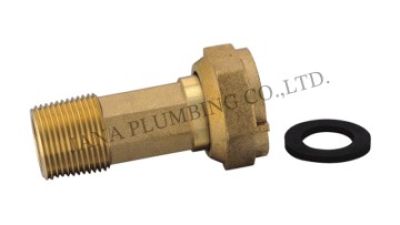
The JN-3003 Meter Coupling is designed to provide a practical connection between a water meter and compatible piping systems. Its lead-free construction supports applications where material safety and dependable service are important. The coupling is available in three standard sizes: JN-3003-1-LF for 1/2-inch connections, JN-3003-2-LF for 3/4-inch connections, and JN-3003-3-LF for 1-inch connections. This range makes it suitable for residential water lines, commercial plumbing assemblies, utility metering points, and other general water-service installations.
For installation, first confirm that the pipe size, meter connection, and coupling specification match. Shut off the water supply, clean and align the connecting surfaces, and install the appropriate sealing components according to the system requirements. Tighten the connection evenly and securely without applying excessive force, then restore the water supply gradually. Inspect the joint for leakage and make any necessary adjustments before placing the line into normal operation.
When selecting a JN-3003 model, use the actual nominal connection size rather than relying only on the appearance of the existing fitting. The 1/2-inch version is suited to compact service lines, the 3/4-inch version supports common residential and light commercial applications, and the 1-inch version is intended for larger flow connections. Checking thread compatibility, available installation space, and local plumbing requirements helps ensure a proper fit and reliable meter maintenance.
It connects a flow meter to a service line. It also supports inspection, replacement, and accurate alignment.
Threaded couplings suit compact metal piping and moderate pressure applications. Use suitable sealing materials. Careful thread engagement matters.
Compression couplings support quick field installation. They use nuts, sleeves, and ferrules. Poor tightening may cause leaks.
Flanged couplings suit larger meters and industrial pipelines. Tighten bolts evenly around the gasket. Uneven loading can create sealing problems.
Union couplings help technicians remove meters frequently. They reduce disassembly time during maintenance. That convenience has practical value.
It separates dissimilar metals in utility systems. This can reduce galvanic corrosion. Protection depends on correct installation.
Match the material to pressure, temperature, fluid chemistry, and pipe material. Stainless steel resists corrosion strongly. Brass may suit many potable-water installations. Plastic reduces weight but needs careful torque control.
Compare identical sizes, thread standards, materials, pressure ratings, gaskets, and surface treatments. Use the same delivery terms. Include testing, transport, customs, and payment charges. Factory price alone is incomplete.
Request drawings, samples, test records, and material certificates. Measure threads, wall thickness, sealing faces, and visible burrs. Pressure-cycle the samples when possible. A low quotation may hide weak consistency.
Uneven tube cuts, poor tightening, damaged threads, and misalignment can cause leaks. Even a small offset may stress the meter body. Inspect before commissioning. Assumptions can fail.
Meter Coupling is an essential connection component used to link water, gas, and other utility meters with pipelines, allowing accurate measurement, secure installation, and convenient maintenance. Industrial and utility systems may use threaded, flanged, compression, union, or customized coupling designs according to pressure levels, pipe sizes, installation conditions, and meter specifications. Reliable products are commonly manufactured from materials such as brass, stainless steel, ductile iron, or engineered plastics, with attention to corrosion resistance, sealing performance, dimensional accuracy, and applicable technical standards.
China offers a broad supply base for meter couplings, including manufacturers and suppliers serving domestic projects and export markets. When comparing prices, buyers should evaluate material grade, structure, surface treatment, testing procedures, order quantity, tooling requirements, packaging, and shipping costs rather than focusing only on the unit price. Quality control, customization capability, delivery reliability, documentation, and after-sales communication are also important factors when selecting a long-term supply partner.