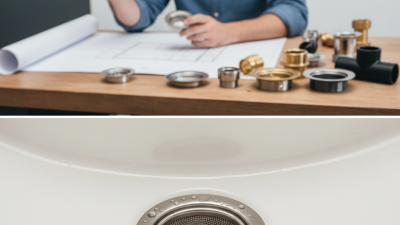
Picking a dependable Sink Colander supplier isn’t just about glancing at product pics and comparing prices online. You really gotta dig a bit deeper—think about the material quality, how well it drains, whether it fits your sink, their production capacity, and how they handle after-sales support. Honestly, a good review starts with checking the stainless steel grade, how their welds look, smoothness of the edges, and if the basket stays sturdy during use. Little details make a big difference, you know? Like, a handle that looks flimsy might bend after a few uses, or drainage holes that are poorly made could leave your veggies sitting in murky water—gross stuff.
Daniel Morgan, a seasoned kitchenware sourcing pro, often says, “A trustworthy Sink Colander supplier shows their quality through the details, not just fancy promises.” And honestly, that’s pretty much how it is. It’s best to test samples in real-life situations—try filling it with potatoes, rinse some leafy greens, and see if it slides around in your sink or scratches the surface. Also, pay attention to how it drains—slow is a no-go.
So, where should you look? Going straight to the manufacturer is a good move—they can customize products and often offer better factory prices. Plus, established distributors tend to be easier to work with for communication and smaller orders. Online B2B platforms are also full of options, but make sure to check out their profiles really carefully—look for factory photos, inspection reports, clear packaging info, and consistent customer reviews. Brands like Ruvati, Kraus, and Joseph Joseph are pretty well-known in the market, though their availability can depend on where you’re located.
Let’s be honest—no supplier is perfect. Even the slickest sample might not perfectly match what they send out in every batch. That’s something to keep in mind. Make sure to ask about their quality control routines, how they handle replacements, lead times, and how they protect products during shipping before you commit to buying. This guide is all about helping you navigate the practical routes to find a Sink Colander supplier that hits the sweet spot between price, quality, and reliable support.
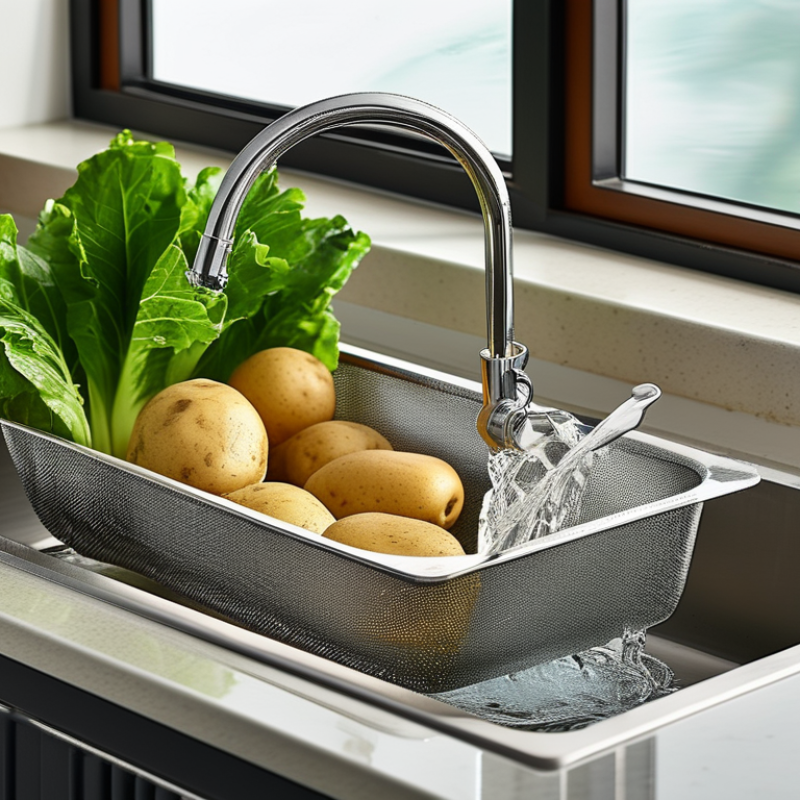
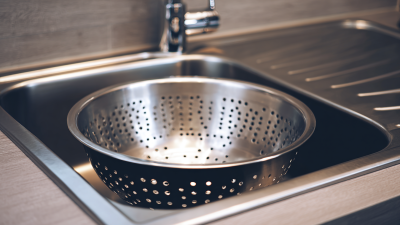
A sink colander is a perforated basket designed to drain water while holding food securely. It usually rests across the sink or fits inside it. The design turns rinsing, soaking, and draining into one controlled task. Leafy vegetables can be washed under running water, then lifted without touching the sink surface. The FDA advises washing produce under running water and avoiding soap or detergent. A colander supports that practice, but it does not replace clean hands or a sanitary sink.
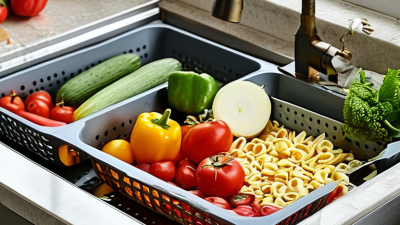
Its usefulness becomes clearer in busy kitchens. A deep basket can drain pasta, berries, beans, or freshly cut vegetables. Side handles improve stability, while small drainage holes help prevent food loss. According to the UNEP Food Waste Index Report 2024, households generated 60% of the 1.05 billion tonnes of food wasted in 2022. Better draining may not solve waste alone, but it can reduce spills and forgotten waterlogged produce.
When choosing a sink colander supplier, buyers should request food-contact material details, load limits, hole dimensions, and cleaning instructions. Materials should align with recognized food-equipment requirements, such as NSF/ANSI 51 principles. I would also check welds, edges, and handle strength by hand. Online photos can hide weak joints. That remains an easy mistake. A reliable supplier should provide samples, inspection records, and consistent production data rather than vague “premium” claims.
Choosing a sink colander from a Chinese supplier requires more than comparing prices. Start with the material. Food-grade stainless steel resists rust, while durable plastic feels lighter but may stain. Check the rim, handles, and drainage holes by touch or product samples. A stable colander should sit across the basin without sliding when filled with noodles or rinsed vegetables. Ask for dimensions in millimeters, not vague “large” or “small” descriptions. This detail prevents fitting mistakes.
Tips: Compare hole size, load capacity, and cleaning access. For Sink Strainers For Kitchen Sink, inspect whether openings block scraps without slowing drainage. Request test reports for material safety and corrosion resistance. Confirm packaging, sample approval, lead time, and replacement terms in writing. Clear answers build trust. Still, a polished catalog is not proof of factory quality. I would inspect several samples before committing.
Look for smooth welds and rounded edges, especially around hand grips. Sharp seams can trap food and make washing unpleasant. If the colander includes extendable arms, test them over different sink widths. Some designs look clever but flex under weight. Ask how quality checks are recorded and whether production samples match shipment samples. Photos help, but they cannot reveal thin metal or weak joints. An honest supplier should explain limitations. The best choice may not be the cheapest one. It should fit your sink, cleaning routine, and daily use.
Choosing the right sink colander starts with the kitchen’s daily workload. Stainless steel suits busy homes because it resists rust, heat, and strong cleaning products. A fine mesh catches rice and vegetable scraps, while wider holes drain water faster after washing leafy greens. However, very thin steel can bend under heavy pans. I learned this after a budget colander warped near a hot basin. It still worked, but poorly.
Silicone models feel softer and store easily in narrow drawers. They are useful for small kitchens, campers, and occasional washing.
Food-grade plastic is lighter and often less expensive, but it may stain after handling tomato sauce or curry. Design matters as much as material. Extendable side arms fit different sinks, while a stable foot keeps the basket above dirty water. For deep sinks, choose a taller bowl with comfortable handles. Keep it simple.
When comparing Sink Strainers For Kitchen Sink china suppliers, ask for material grades, hole sizes, weight limits, and sample testing. Reliable suppliers should provide clear measurements and consistent production details. Check whether the rim stays firm when filled with potatoes. That small test reveals more than polished photographs. Drainage speed, cleaning effort, and storage space should guide the final choice, although personal habits can change the answer.
How to Identify a Reliable Sink Colander Supplier in China
A reliable sink colander supplier should prove quality beyond a polished catalog. Ask for material details, product drawings, and recent production photos. Food-contact stainless steel should have clear grade information and consistent surface finishing. Check the rim, drain holes, handles, and weld points carefully. Small burrs can damage hands and reduce customer trust.
Request a sample before discussing large orders. Test it inside your target sink and inspect its stability under running water. Measure the diameter, depth, and drainage speed. A practical supplier should explain minimum order quantities, packaging, lead times, and inspection procedures clearly. During sourcing work, I have found that quick replies do not always mean reliable service. One supplier answered professionally but changed specifications later. That mistake was avoidable.
Tips: Compare at least three suppliers. Ask for a video showing current production. Confirm carton strength and inner protection. Use a written specification sheet. Check whether the supplier accepts independent inspections. Keep every change in writing. A dependable partner welcomes detailed questions, although communication may still require patience. Review sample defects honestly, rather than ignoring them to save time. Supplier directories can help you search, but factory evidence deserves greater weight.
| Evaluation Dimension | Recommended Data or Requirement | |||
|---|---|---|---|---|
| Material Safety | Food-contact materials should be clearly identified, such as stainless steel, food-grade silicone, or food-contact polymer. The material declaration should match the actual product. | Request the material specification, food-contact declaration, and recent migration or safety test reports applicable to the destination market. | High Risk Vague descriptions such as “premium metal” without a material grade, composition, or supporting documentation. | |
| Stainless Steel Grade | For common kitchen use, the declared grade should be suitable for food contact and corrosion resistance. The grade must be consistent across the quotation, drawing, packaging, and test documents. | Compare the stated grade with a material certificate or third-party composition test. Check chromium and nickel content when the supplier claims an austenitic stainless-steel grade. | Check Carefully The supplier gives only “stainless steel” without a specific grade or cannot explain differences between product versions. | |
| Product Dimensions | Key measurements normally include overall length, width, depth, rim size, handle length, and compatibility with the target sink. Tolerances should be stated on the technical drawing. | Request a dimensioned drawing and measure the sample with calibrated tools. Confirm that the sample dimensions match the mass-production specification. | High Risk Dimensions are provided only as approximate photographs, or the supplier cannot confirm sink compatibility. | |
| Drainage Performance | The colander should drain water effectively without excessive pooling. Hole diameter, hole spacing, slot design, and drainage-area layout should be defined for each model. | Test the sample with a consistent quantity of water and food items. Record drainage time, residual water, and whether food blocks the openings. | Check Carefully Drainage claims are based only on marketing language and no repeatable test method is available. | |
| Edge and Surface Finish | Food-contact edges should be smooth, burr-free, and easy to clean. The inner surface should not have sharp points, deep scratches, loose polishing residue, or exposed cutting edges. | Conduct visual inspection, use a clean cloth or cotton swab along the rim, and inspect the product under bright light. A controlled sample inspection should be included in the quality plan. | High Risk Sharp edges, uneven rolled rims, pinholes, rough welds, or polishing dust found on the sample. | |
| Load and Stability | Handles, support feet, and rims should remain stable during normal loading with wet vegetables or pasta. The supplier should define its own load and deformation limits. | Carry out a practical load test using the intended maximum contents. Check handle joints, support points, permanent deformation, and stability on the sink. | Check Carefully The product tips easily, the handle flexes excessively, or the supplier has no documented inspection point for structural parts. | |
| Dimensional Tolerance | Critical dimensions such as rim width, support spacing, and nesting size should have written tolerances. Tolerances must be suitable for the sink and packaging design. | Compare production samples with the approved drawing. Ask for inspection records showing actual measurements rather than only a pass/fail statement. | High Risk Tolerances are absent, inconsistent between documents, or changed without written approval. | |
| Quality Management | A reliable supplier should maintain documented incoming-material checks, in-process inspections, final inspections, corrective actions, and traceability. | Request a quality-process overview, sample inspection report, defect classification, and evidence of corrective-action management. An independent factory audit is useful for larger orders. | Check Carefully Quality control depends only on final visual inspection or the supplier refuses to describe its inspection process. | |
| Compliance Documentation | Documents should match the product, material, production site, and destination-market requirements. Common documents may include food-contact declarations, test reports, and product specifications. | Check the report number, product description, test date, laboratory details, material description, and applicable regulations. Confirm that the documents are not for a different model. | High Risk Expired, unverifiable, incomplete, or mismatched certificates and test reports. | |
| Sample Policy | A professional supplier should provide a pre-production sample or approved reference sample before mass production. Sample changes should require written confirmation. | Compare the approved sample with the production inspection sample for material, dimensions, finish, color, packaging, and function. | Check Carefully | The supplier avoids sampling, substitutes a different model, or refuses to record sample approval. |
| Production Capacity | Capacity should be evaluated against the required quantity, delivery schedule, tooling needs, and peak-season workload rather than a single claimed monthly figure. | Ask for the production process flow, equipment list, typical lead time, subcontracting details, and a realistic capacity plan for the specific model. | Check Carefully Capacity claims are unusually high but no production plan, equipment information, or lead-time evidence is provided. | |
| Minimum Order Quantity | Minimum order quantity varies by material, tooling, packaging, and customization. The quotation should separate standard-product MOQ from custom-product MOQ. | Request a written quotation showing MOQ, tooling charges, sample charges, packaging requirements, and the cost impact of lower quantities. | Check Carefully Hidden setup fees or packaging minimums appear after the order is placed. | |
| Packaging Protection | Packaging should protect polished surfaces, rims, handles, and nested products from scratches, deformation, moisture, and contamination during transport. | Perform a packaging drop or transport simulation appropriate to the shipment. Inspect inner protection, carton strength, labeling, and nesting separators. | High Risk | Products touch each other without protection, cartons are overloaded, or packaging specifications are not approved before production. |
| Traceability | Orders should be traceable by production date, material batch, inspection record, and shipment carton or lot information. | Check whether the supplier can link a finished product lot to material records, inspection results, and packing documents. | Check Carefully | The supplier cannot identify the production lot or retrieve inspection records after shipment. |
| Communication and Change Control | Product changes involving material, dimensions, finish, tooling, packaging, or production location should be notified and approved before implementation. | Use a written specification, purchase order, approved sample, and change-confirmation process. Evaluate response time and technical clarity during the sample stage. | Check Carefully | Unapproved substitutions, unclear answers, slow corrective actions, or important details communicated only verbally. |
| Final Supplier Selection | Select the supplier with the strongest combination of verified material safety, stable quality, suitable capacity, transparent pricing, dependable documentation, and responsive service. | Use a weighted scorecard. A practical approach is to assign the highest weights to safety, product quality, consistency, and delivery reliability, then compare at least three qualified suppliers. | Recommended | Do not select solely on the lowest quotation; undocumented cost reductions may result from lower material quality or weaker quality control. |
China-made sink colanders are available through online sourcing platforms, factory websites, and offline kitchenware markets. China’s National Bureau of Statistics reported that online retail sales of physical goods reached RMB 13.02 trillion in 2023. This figure shows why online purchasing has become practical for overseas buyers.
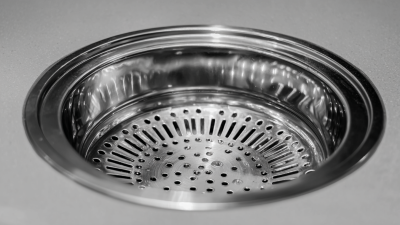
Search for a supplier offering a detailed Sink Grid, stainless steel grade, mesh size, dimensions, and drainage design. Request product photos, material certificates, and a sample before placing a large order. A useful sample should fit your sink without rocking. Check its welds, edges, surface finish, and basket handles. Small defects matter during daily washing.
Offline buyers can visit wholesale markets, trade fairs, or factory showrooms in major manufacturing areas. Face-to-face inspection helps reveal the real wire thickness and polishing quality. UNIDO’s International Yearbook of Industrial Statistics 2024 identifies China as the world’s largest manufacturing economy, supporting its strong production capacity. Still, capacity does not guarantee consistency. A polished catalog can hide uneven batches. Compare at least three quotations, confirm packaging details, and ask about replacement procedures. The cheapest offer may become expensive after damaged cartons or poor fitting. Perfect screening is difficult. That is worth remembering.
China Best Sink Colander Supplier Where to Buy?
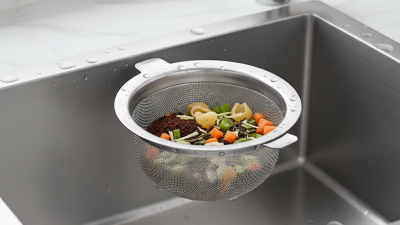
Price should be compared against landed cost, not the factory quotation alone. Ask for a sample Sink Strainer before discussing large orders. Check stainless-steel grade, wire thickness, weld smoothness, drainage speed, and basket fit. A cheap strainer may develop sharp edges after polishing or discoloration after repeated washing. Request material certificates and an inspection report from an independent testing agency. ISO 9001 can show process control, but it does not prove every batch is flawless.
Customization needs written limits. Confirm diameter, depth, mesh spacing, handle shape, logo method, packaging, minimum order quantity, and tooling charges. Ask for a technical drawing with tolerances. Small changes can affect mold costs and delivery dates. I would also test ten samples, not just one. One perfect sample can hide inconsistent production. This is where buyers often become too optimistic.
Shipping terms deserve equal attention. UNCTAD’s Review of Maritime Transport reports that ships carry over 80% of global merchandise trade by volume, so port delays can change your real cost. Compare FOB, CIF, and DDP under ICC Incoterms 2020, including insurance, customs responsibility, and destination fees. Request a production schedule, carton dimensions, loading photos, and a clear remedy for shortages. A supplier offering the lowest price may still lose money after freight, inspection, and rework. Check the details twice.
Recommended weighting for comparing pricing, quality, customization, and shipping terms when sourcing sink colanders.
Quality and pricing typically receive the greatest attention because they directly affect product performance and landed cost. Customization and shipping terms are also important for private-label orders, packaging requirements, delivery planning, and total procurement risk.
Stainless steel handles heat, rust, and strong cleaning products well. Choose a sturdy gauge. Very thin steel may bend under heavy pans.
Silicone works well in small kitchens, campers, and occasional washing. It folds into narrow drawers. Soft sides may feel less stable.
Plastic is lightweight and usually less expensive. Tomato sauce or curry may stain it. Check its heat resistance before regular use.
Extendable arms fit different sink widths. A stable foot keeps the basket above dirty water. Comfortable handles help with heavy vegetables.
Fine mesh catches rice and small vegetable scraps. Wider holes drain leafy greens faster. One basket may not perform both tasks perfectly.
Place the sample inside your target sink. Fill it with potatoes and run water through it. Check stability, drainage speed, handles, and rim strength.
Ask for material grades, drawings, hole sizes, weight limits, packaging details, and lead times. Keep every specification in writing. Memories are unreliable.
Compare at least three suppliers. Request production videos and recent photos. Confirm carton strength and inner protection. A fast reply proves little.
Independent inspections can reveal hidden defects and changed specifications. Check weld points, drain holes, rims, and surface finishing. Small burrs matter.
A Sink Colander is a practical kitchen accessory designed to fit over or inside a sink, allowing users to rinse, drain, and temporarily hold fruits, vegetables, pasta, and other foods. When choosing one, compare its size, shape, drainage efficiency, stability, weight capacity, handle design, foldability, and ease of cleaning. Stainless steel, food-grade plastic, and silicone each offer different benefits, while adjustable or expandable designs can suit various sink sizes and kitchen layouts.
To find a reliable sink colander supplier in China, review product specifications, manufacturing experience, quality-control procedures, customization capabilities, and customer communication. Buyers can explore online wholesale platforms, supplier websites, trade exhibitions, and local sourcing agents. Before placing an order, evaluate unit pricing, sample quality, minimum order quantities, packaging, logo or color customization, payment terms, production schedules, shipping methods, and after-sales support. A balanced comparison of cost, quality, flexibility, and delivery reliability can help buyers select the most suitable supplier.